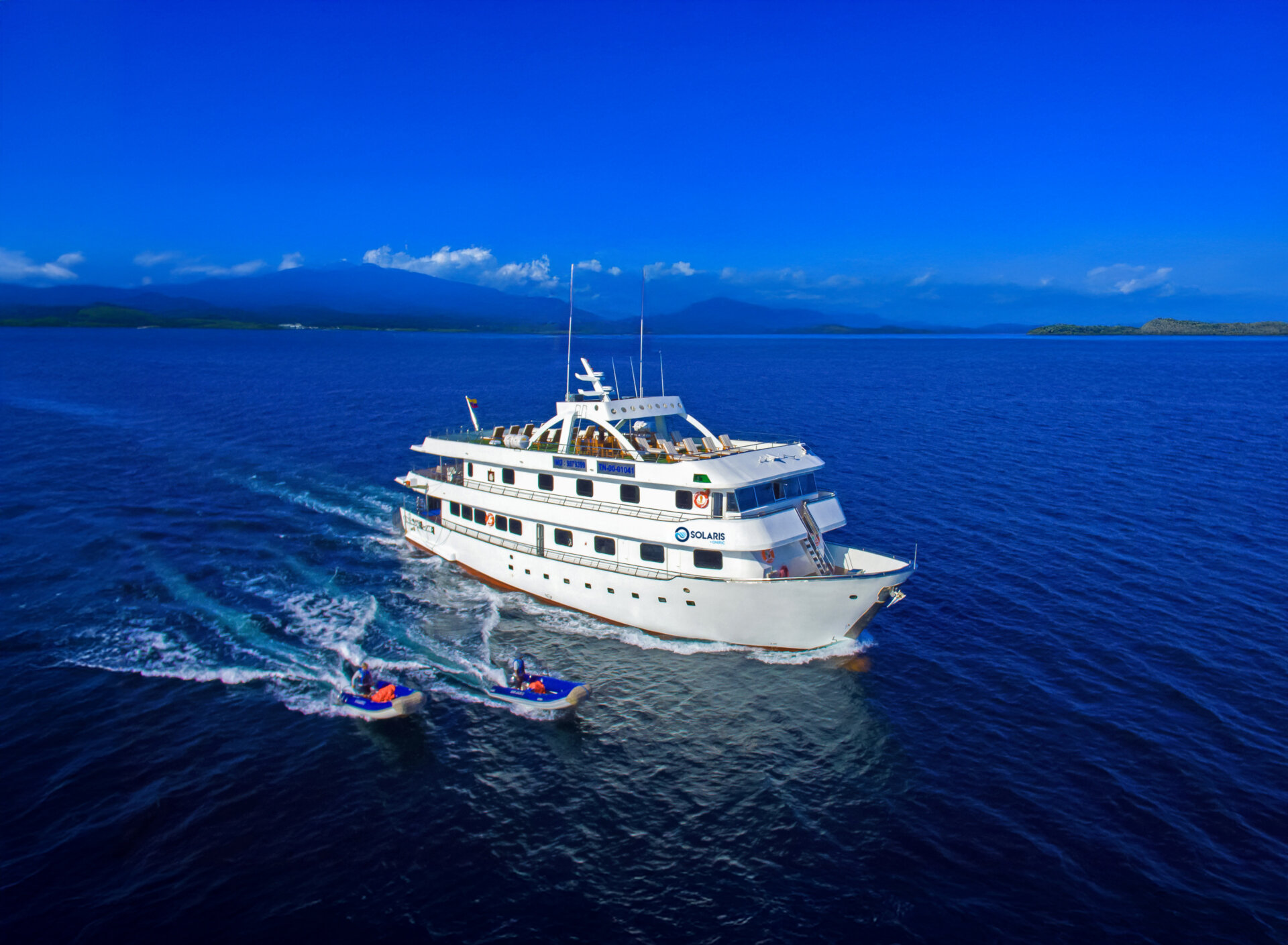
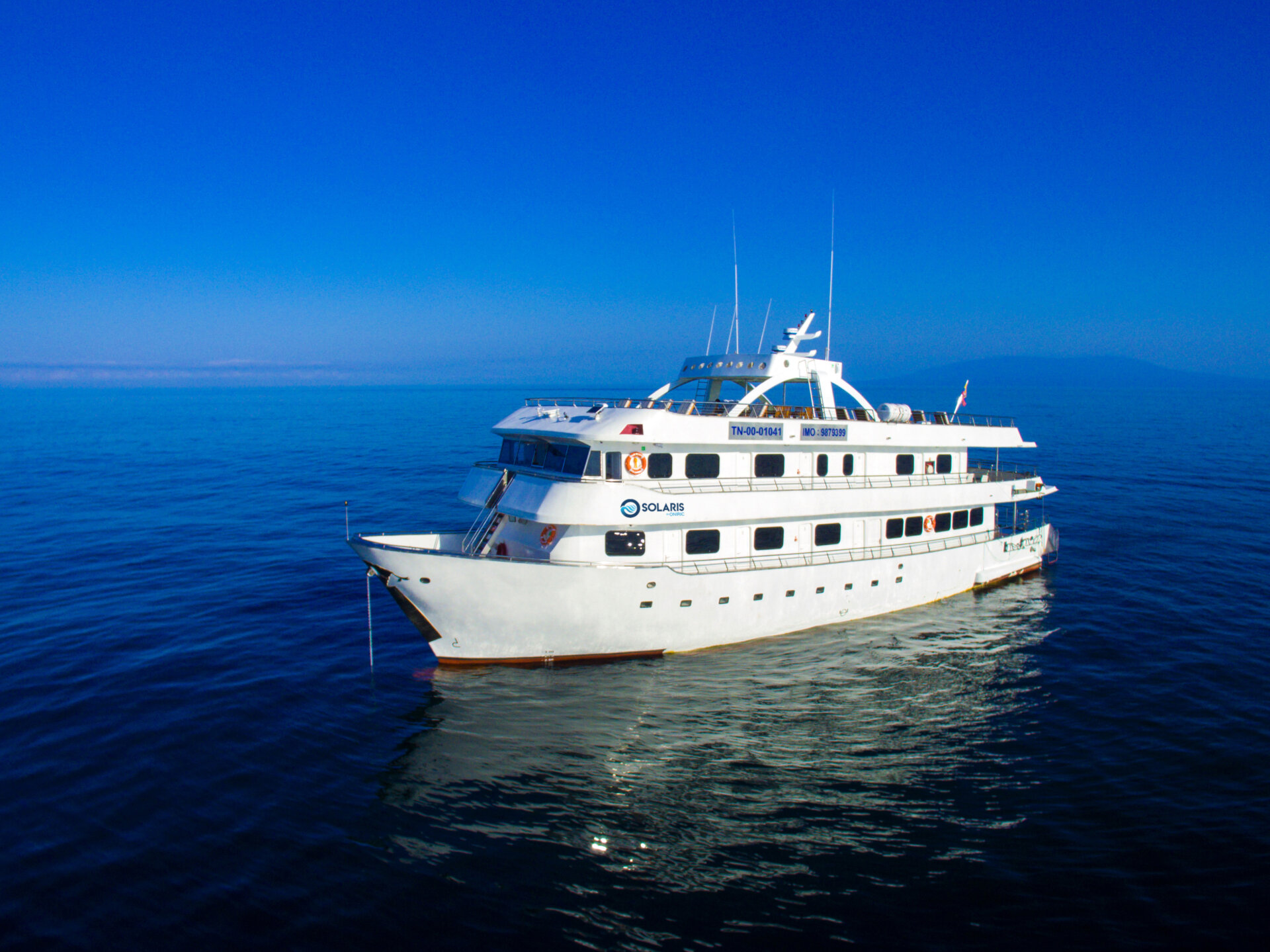
Discover the unmatched biodiversity of the Galapagos Islands aboard the Yacht Solaris. Designed for travelers who want to deeply engage with the archipelago's unique wildlife and pristine environments, the Solaris offers a premium, intimate expedition experience. With a maximum capacity of just 16 passengers, this modern motor yacht provides a quiet, spacious base for your daily environmental encounters alongside expert English-speaking naturalist guides.
Key Features & Unique Advantages:
-
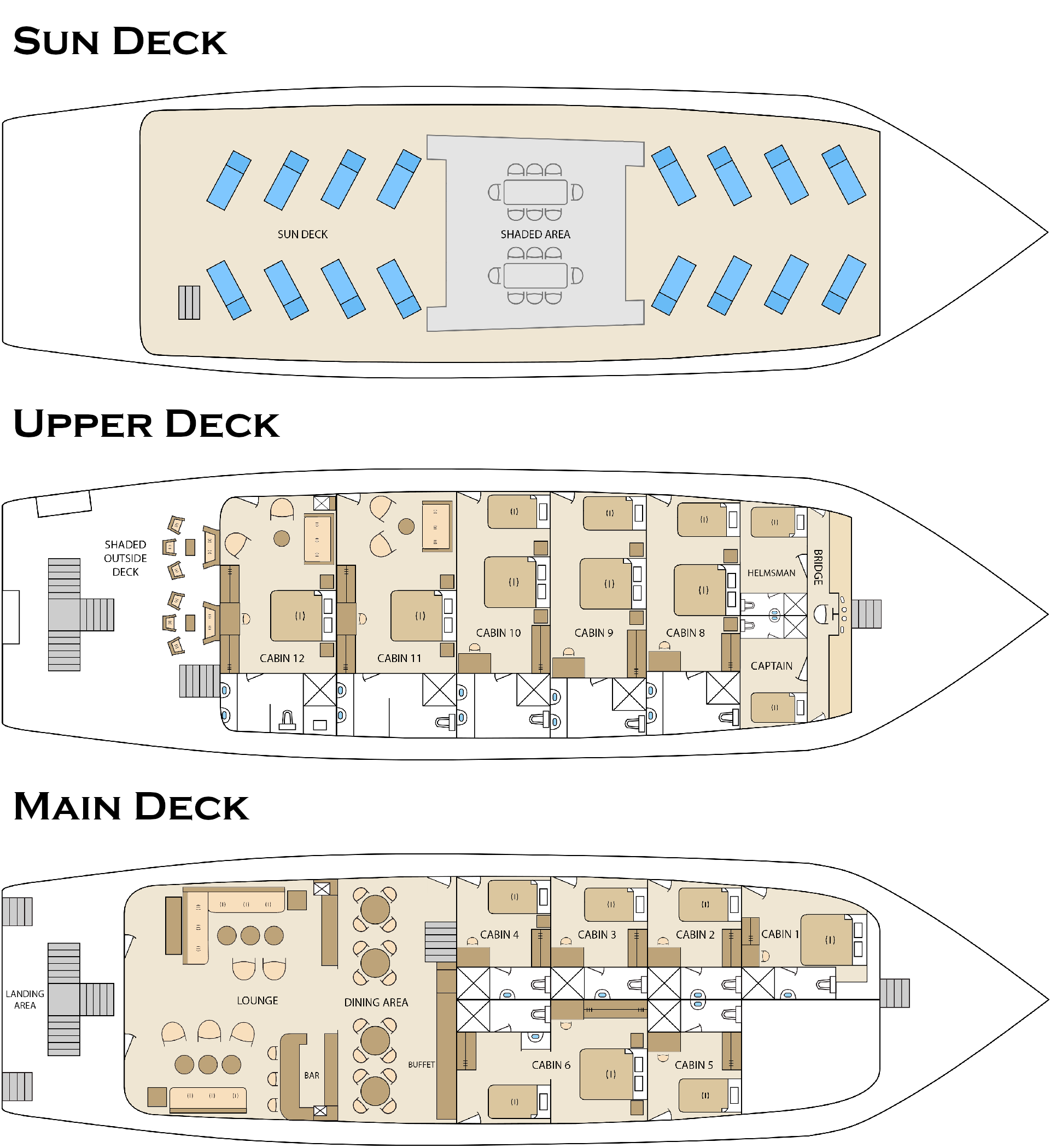
Unrivalled Accommodation for Solo Travelers: A true rarity in the Galapagos, the Solaris features 11 cabins for its 16 guests – including 5 dedicated single-occupancy cabins on the Main Deck. This makes the yacht an outstanding choice for independent travellers seeking privacy and comfort without the standard requirement to share a room.
-
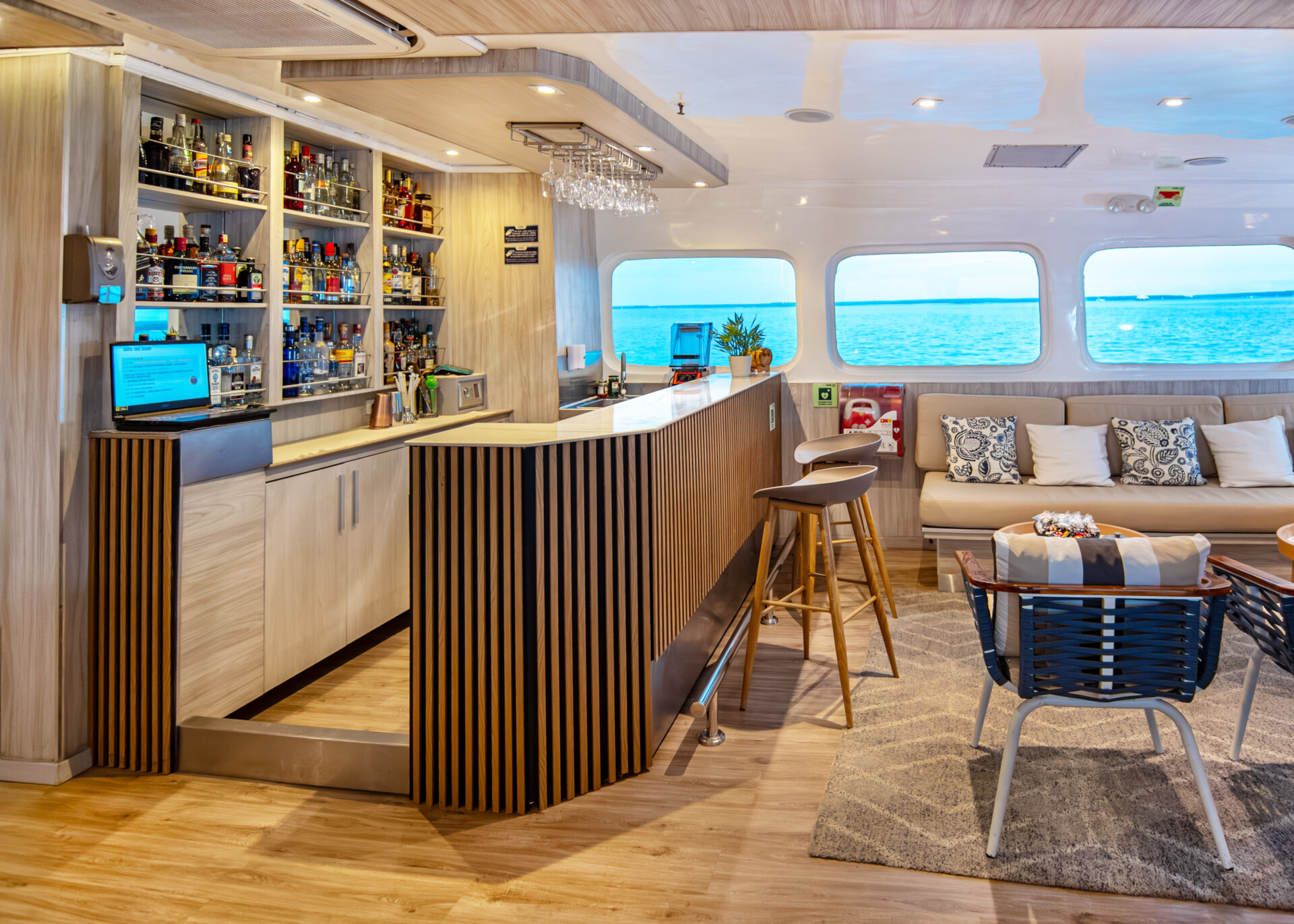
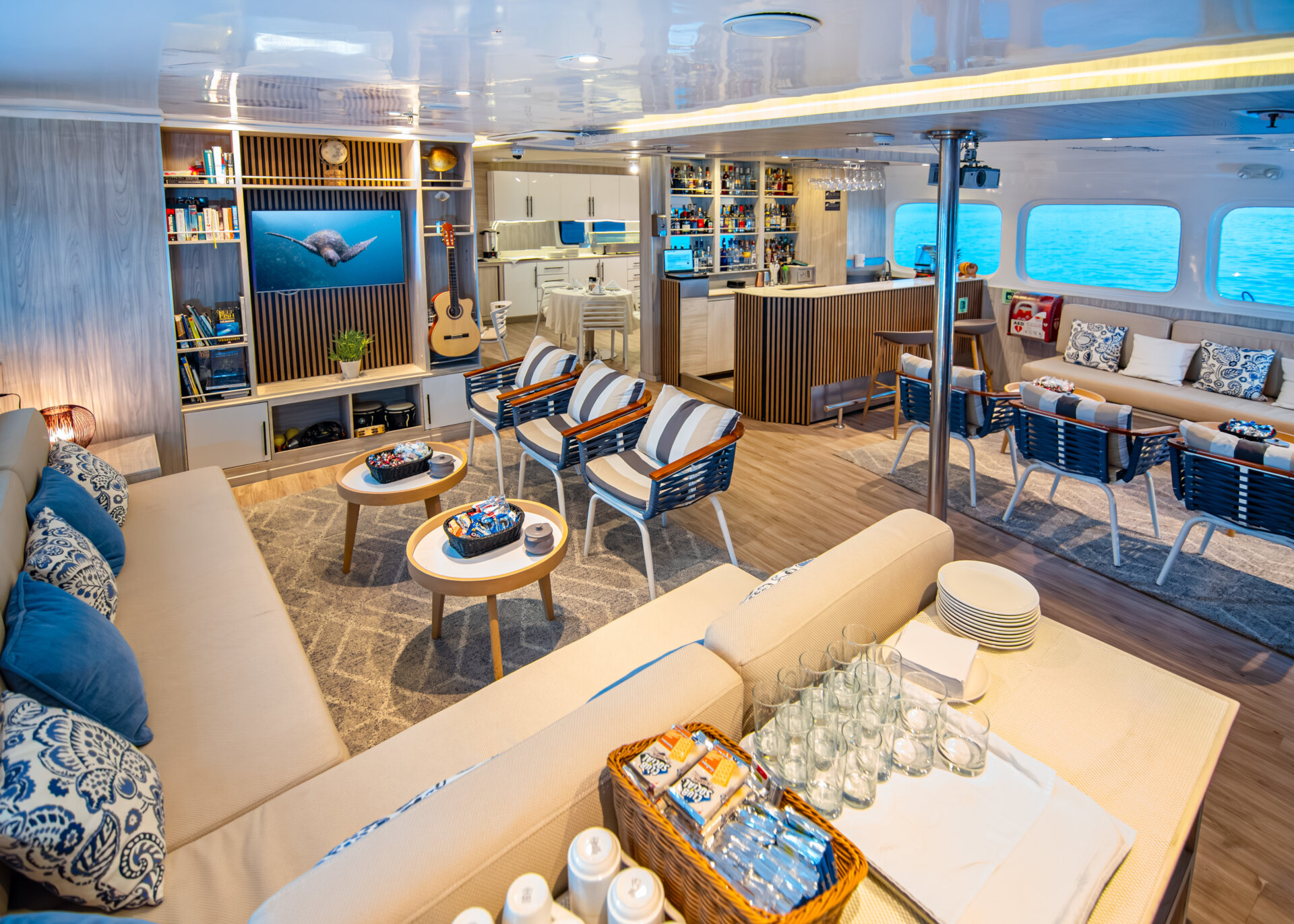
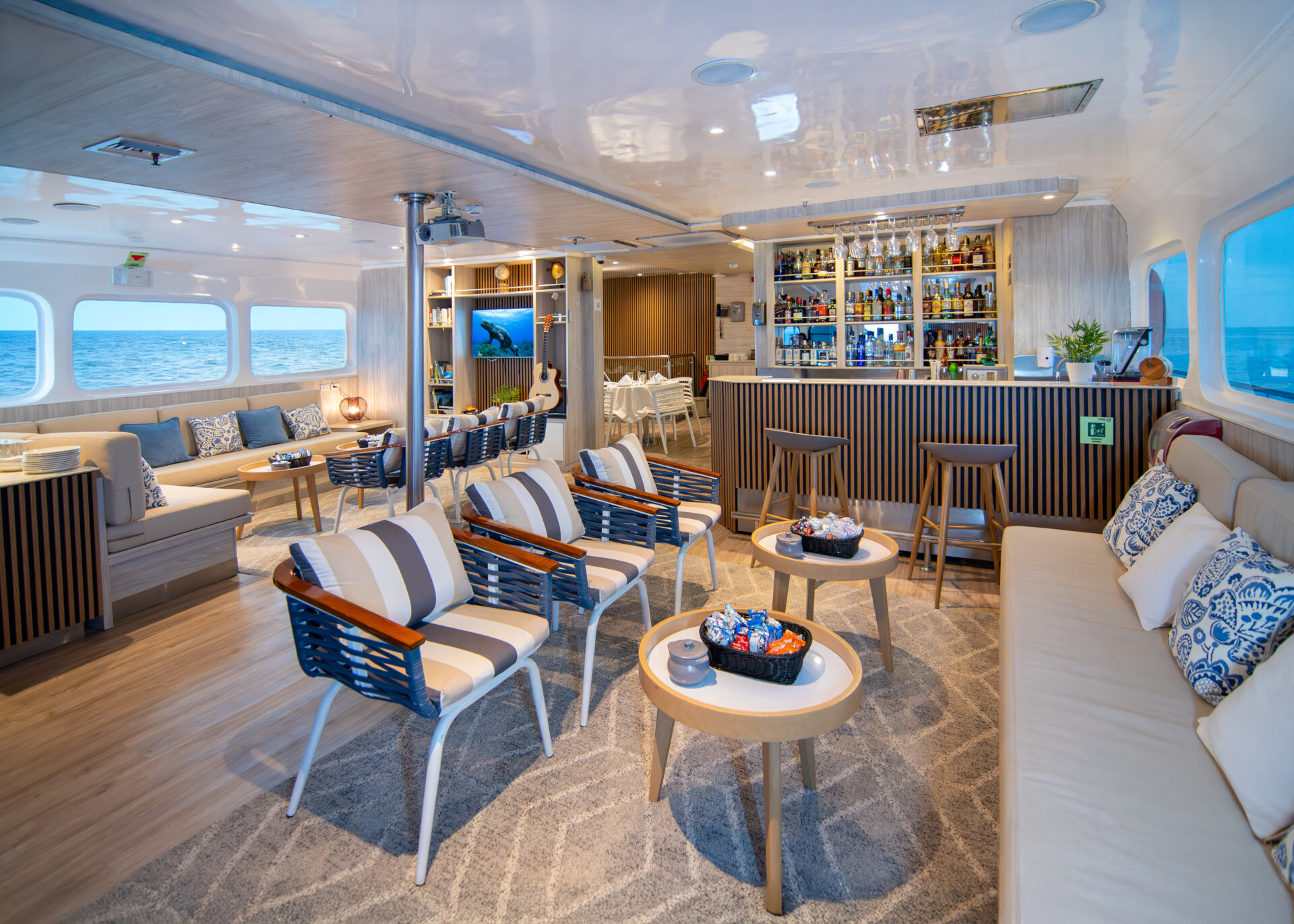
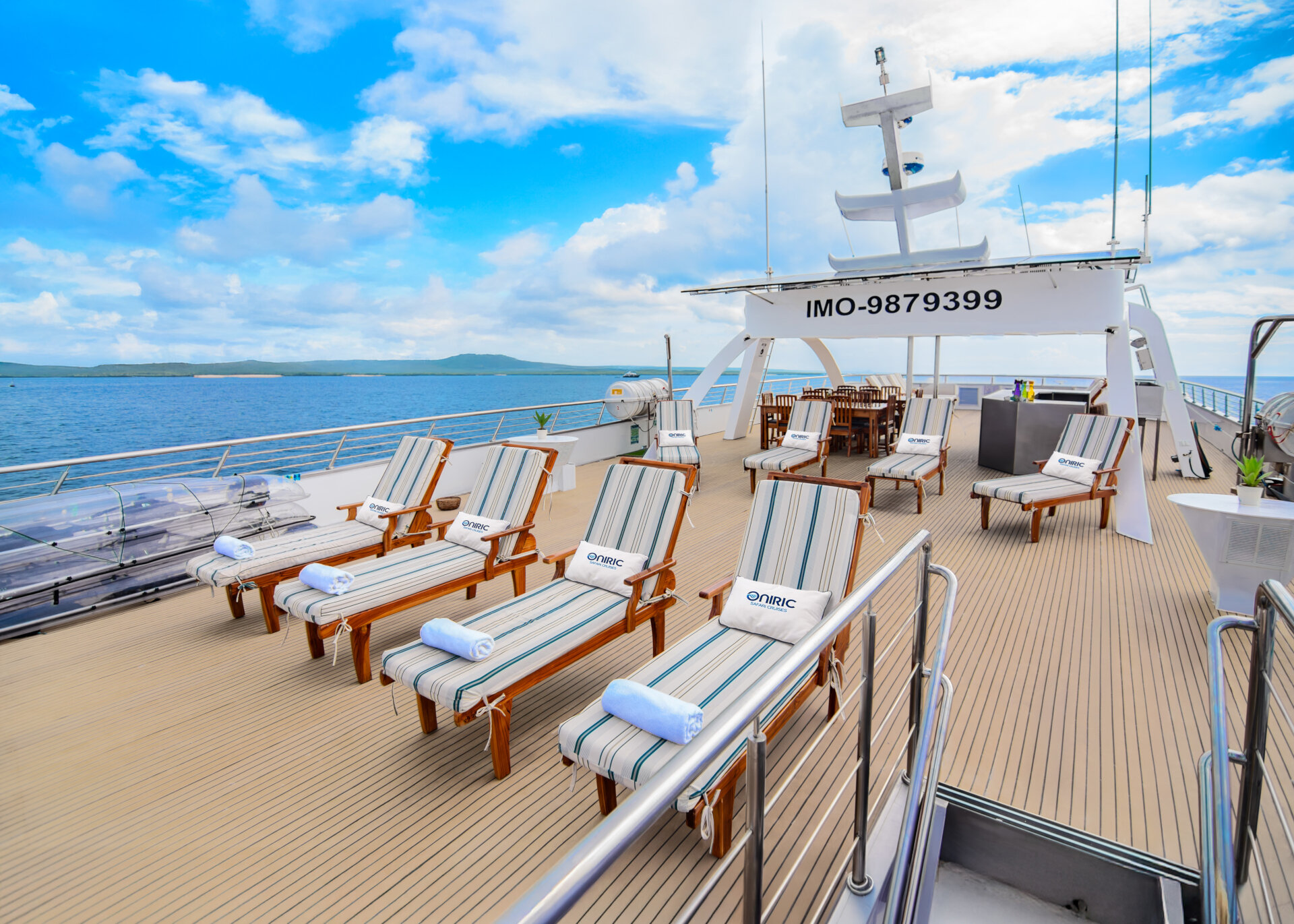
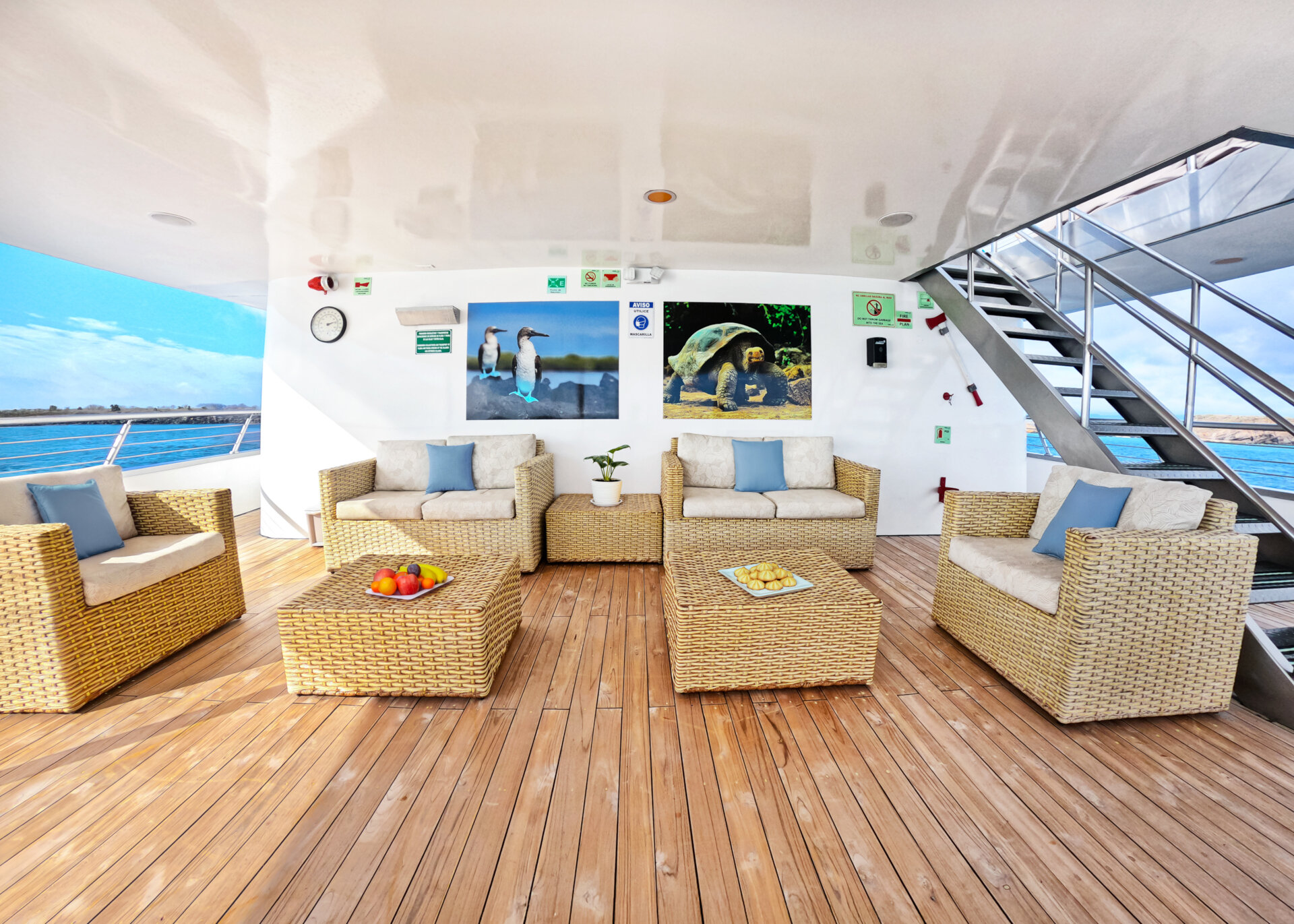
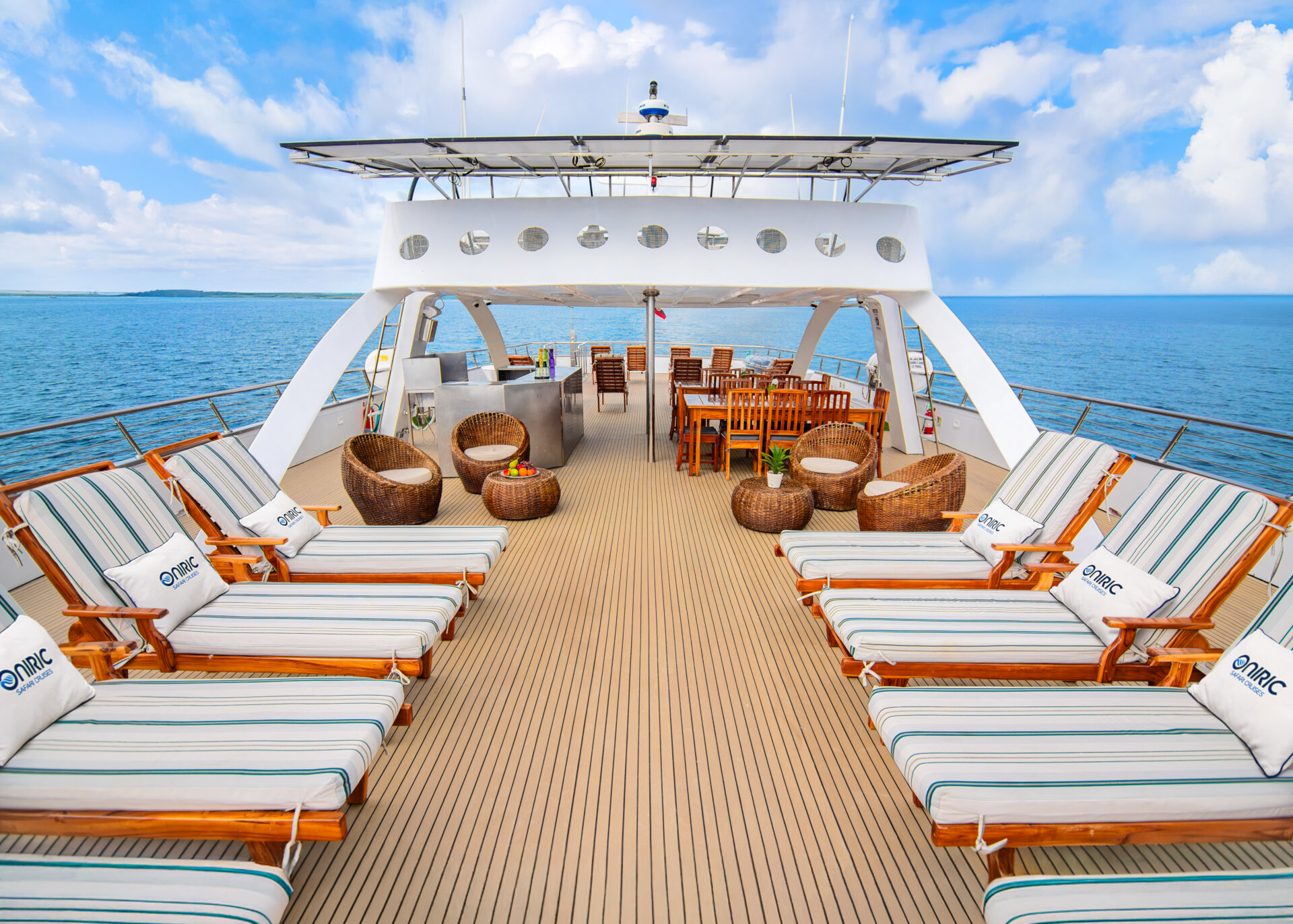
Exceptional Space and Comfort: At 36 metres (118 feet) in length, the vessel is remarkably large for a 16-passenger capacity. This generous footprint provides expansive social areas to relax between excursions, including a top-level sun deck, a shaded upper-deck lounge, and a quiet main-deck library ideal for reviewing the day's wildlife sightings.
-
High Crew-to-Guest Ratio: With a dedicated crew of 10 supporting a maximum of 16 passengers, the onboard service is highly attentive and seamlessly managed, ensuring a welcoming and stress-free atmosphere throughout your voyage.
-
Immersive Exploration: The vessel is fully equipped to get you closer to the environment. Sea kayaks and snorkelling gear are complimentary, allowing you to peacefully explore the marine reserves, volcanic coastlines, and sheltered bays that make the Galapagos world-renowned.
Ocean-View Cabins
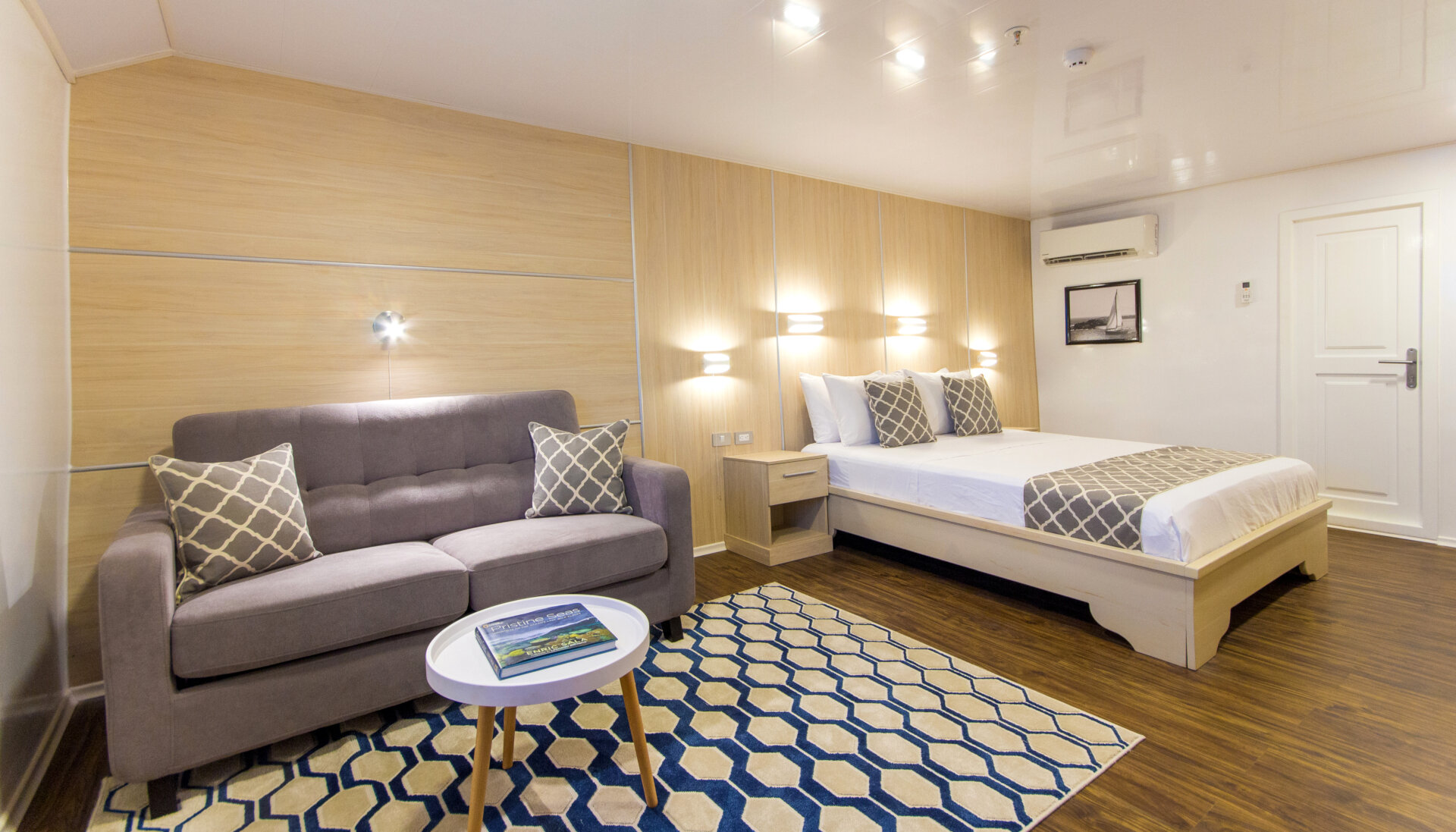
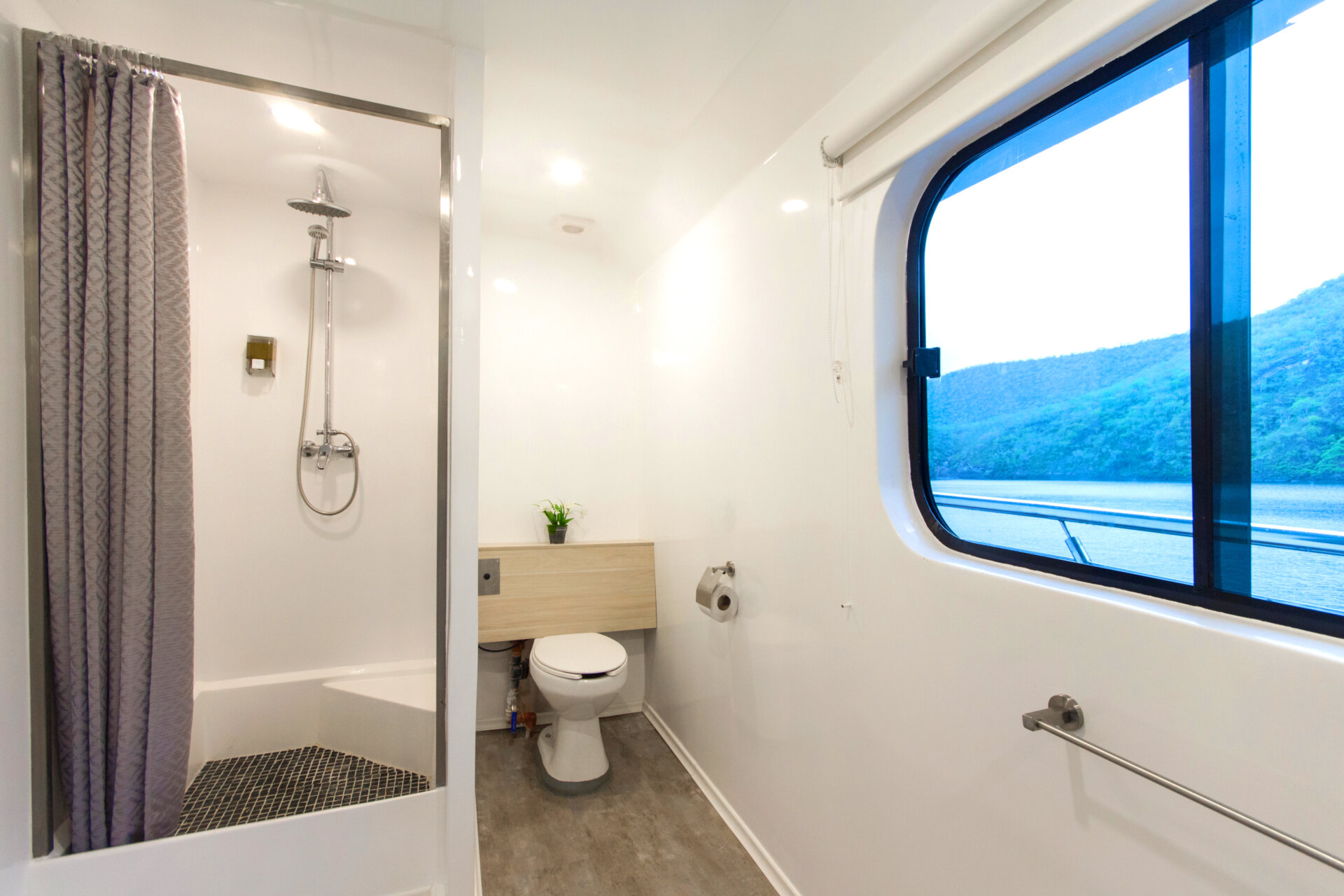
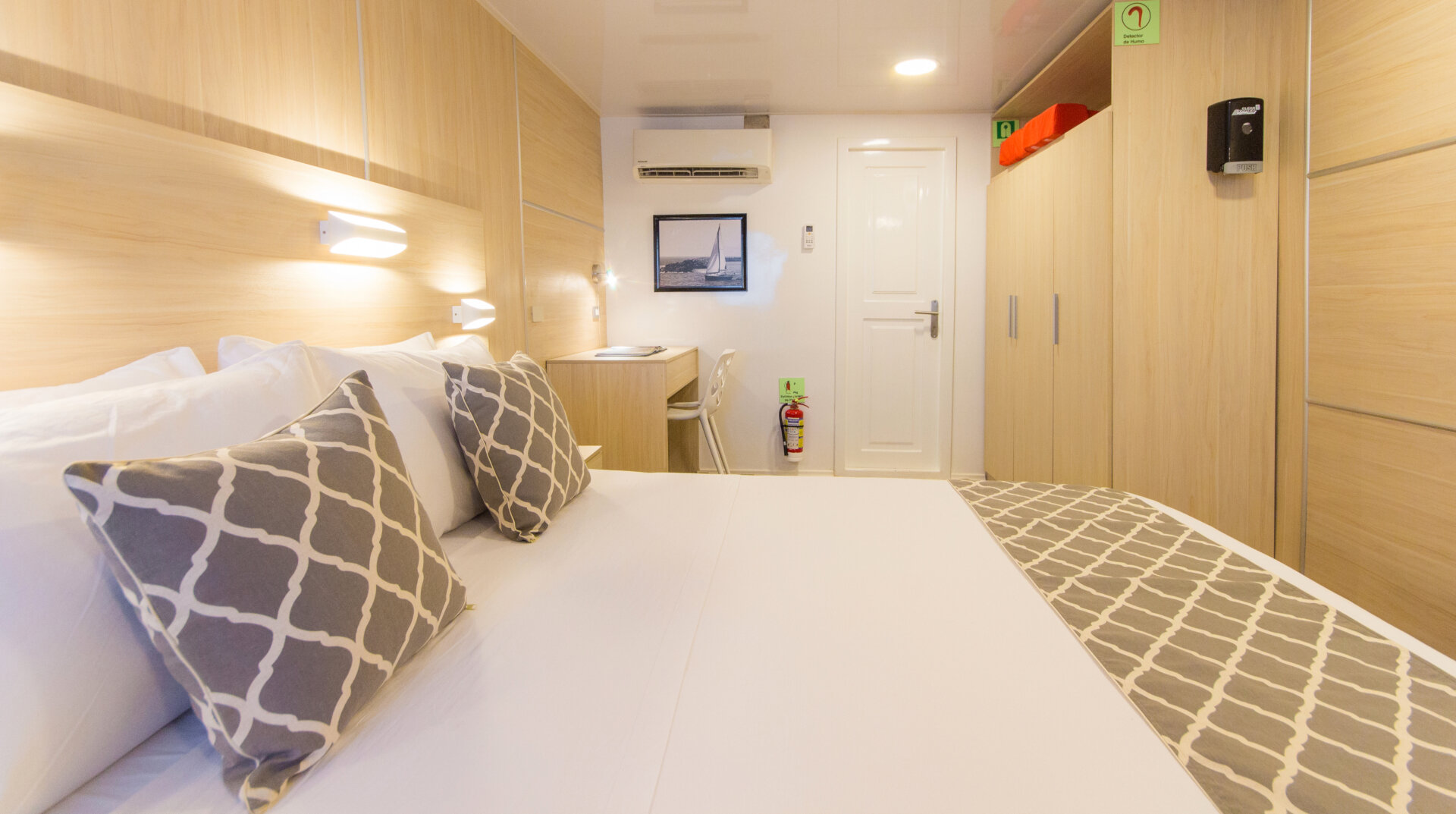
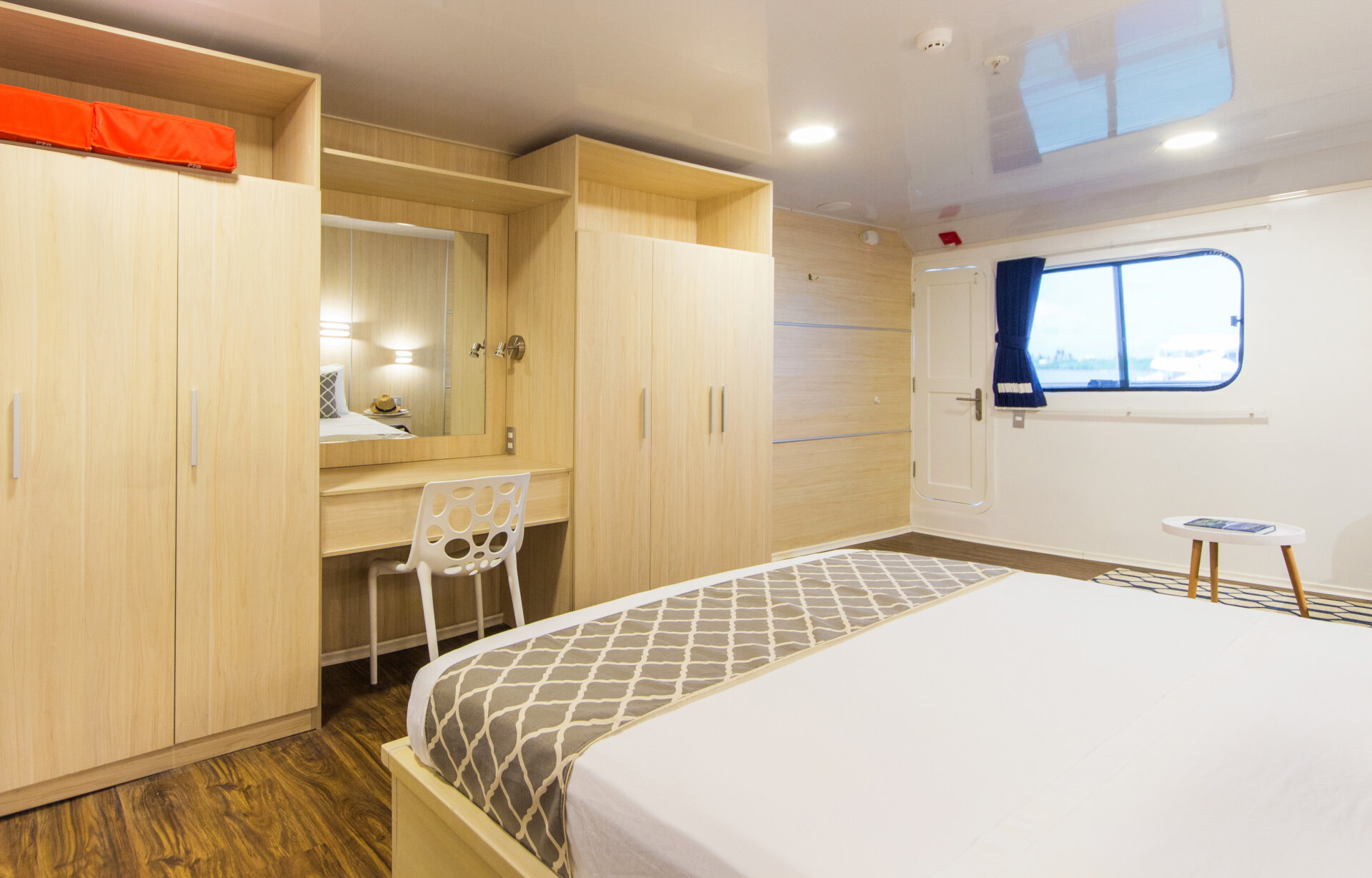
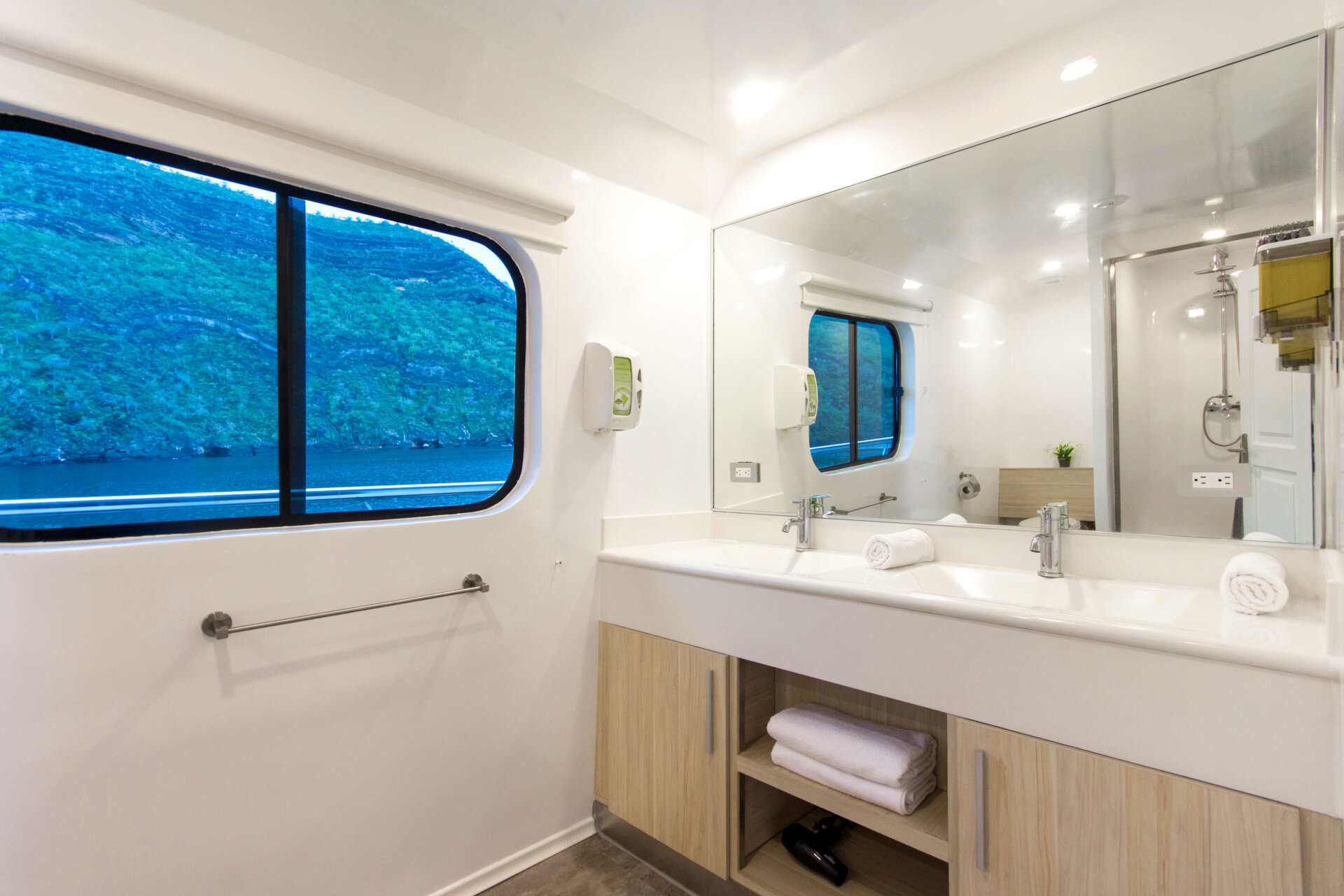
Every cabin aboard the Solaris features large windows offering continuous ocean views, ensuring you remain connected to the marine environment even while resting. Each fully air-conditioned cabin is practically appointed with private ensuite facilities, a hot shower, comfortable bedding, and environmentally safe, biodegradable toiletries to help protect the delicate local ecosystem.
Technical Specifications
| Feature | Specification |
| Vessel Type | First-Class Motor Yacht |
| Length | 36 meters (118 feet) |
| Beam | 9 meters (29.5 feet) |
| Capacity | 16 Passengers |
| Crew | 10 Crew Members + 1 Bilingual Naturalist Guide |
| Cabins | 11 Total (5 Single, 6 Double/Twin configurations) |
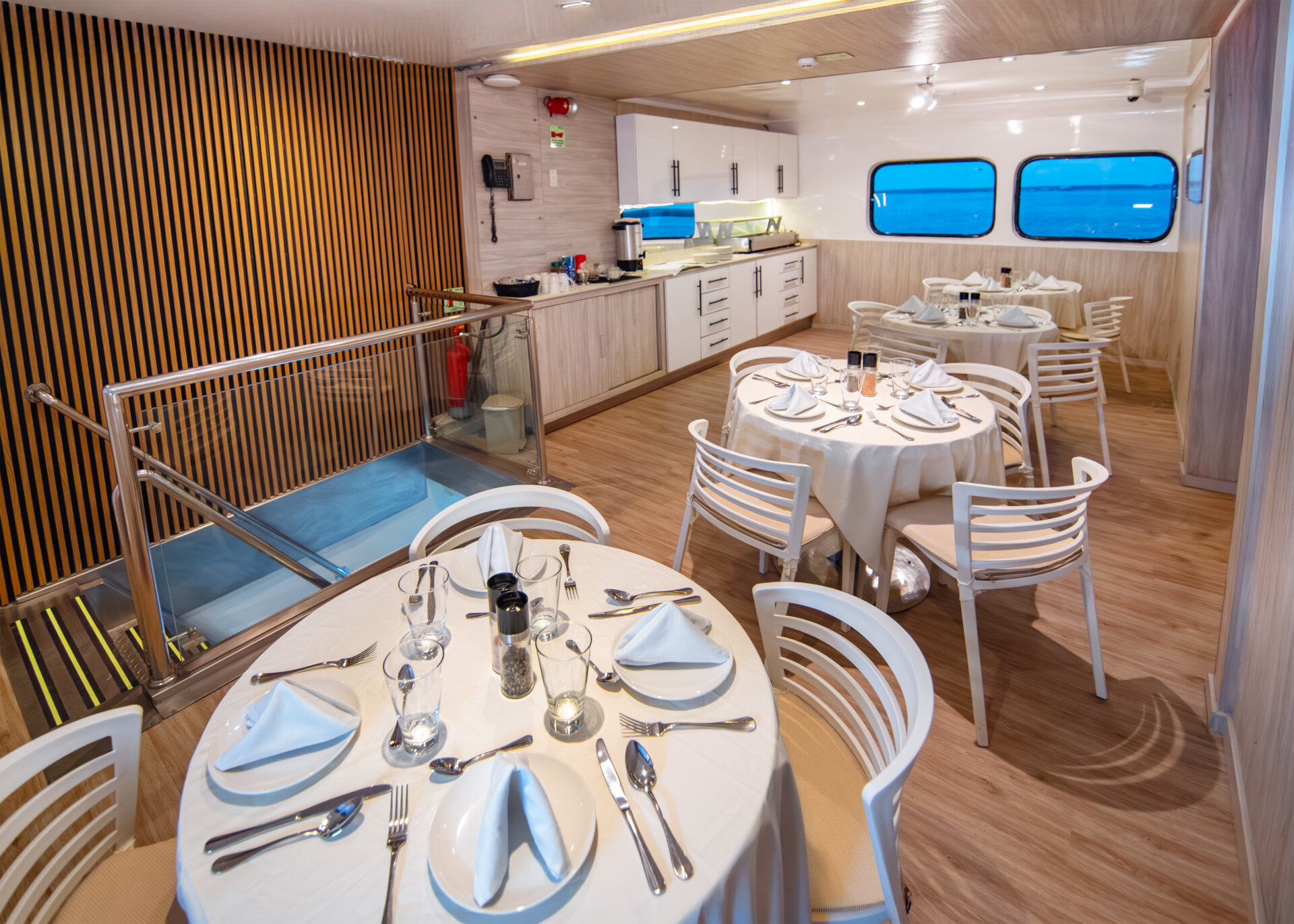
| Social Areas | Sun deck with loungers, shaded upper deck lounge, bow lounge, dining room, library |
| Activities Included | Guided hikes, snorkeling (gear included), kayaking |
| Safety Equipment | 2 GPS systems, full fire equipment, CO2 banks, complete first aid/trauma kit, emergency life jackets |
Deck Plan
Itinerary
Each itinerary is designed as just a single part of your Galapagos experience and are combinable. We recommend combining itineraries for a more comprehensive visit to the Galapagos Islands.
Please note that these itineraries are subject to change without notice due to seasonal changes, last minute weather conditions and the decision of the Galapagos National Park authority.
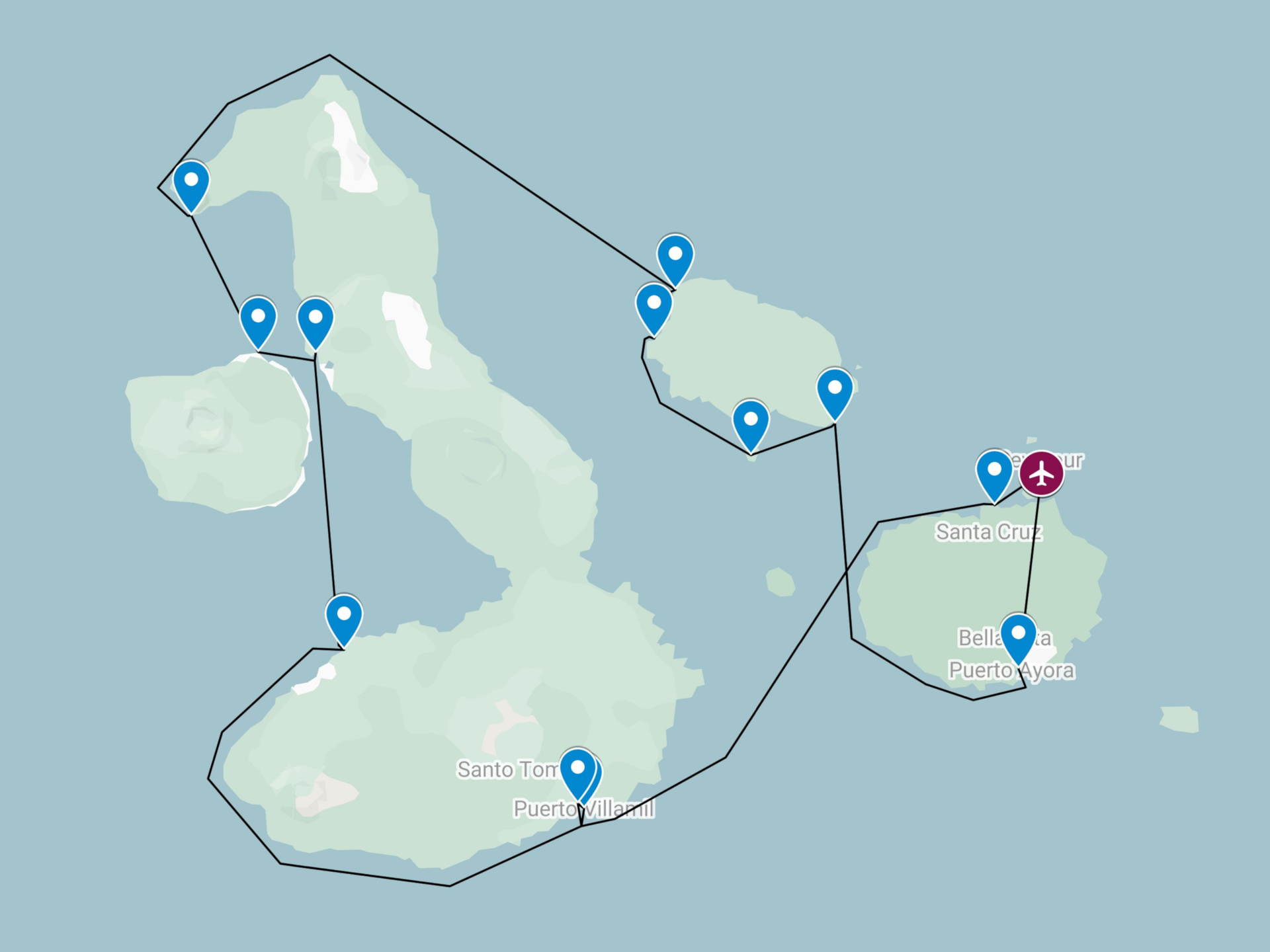
Itinerary A – West (7 Days / 6 Nights)
Day 1: Arrival & Bachas Beach
AM: Arrival, Isla Baltra
Upon arrival Baltra, travellers pass through an airport inspection point to make sure that no foreign plants or animals are introduced to the islands, and to pay the park entrance fee of $200 (unless it has been prepaid). A guide will meet you, help you collect your luggage and escort you on a short bus ride to the harbour.
PM: Playa las Bachas, Isla Santa Cruz
These two small beaches are found to the west of Turtle Cove. Their sand is made of decomposed coral, which makes it white and soft, and a favourite nesting site for sea turtles. Behind one of the beaches there is a small brackish water lagoon, where it is occasionally possible to observe flamingos and other coastal birds, such as black-necked stilts and whimbrels.
The other beach is longer, but it has two old barges that were abandoned during World War II, when USA used Baltra Island as a strategic point from which to protect the Panama Channel. The rocky shoreline can be a great place to photography Sally Lightfoot Crabs.
Day 2: Tintoreras & Wetlands/Tortoise Breeding Centre
AM: Islote las Tintoreras, Isla Isabela
Las Tintoreras are small islands which lie just offshore from Puerto Villamil – the small, but main town on Isabela. A visit here can be very rewarding. If Galapagos Penguins are around then they might well be the first life you see as you approach by small boat – standing or lying on bare lava rocks, close to the spreading roots of mangroves. Blue-footed boobies are often seen on the same rocks and amongst bright green mangrove foliage.
As you step ashore, take care as there may be hundreds of small young marine iguanas. As you proceed past impossibly sharp and contorted lava, you will come to lava tunnels where white-tip reef sharks (tintoreras in Spanish) rest in shallow water. Sally Lightfoot crabs can be observed on the cliffs leading down to the water.
Further along, you will come to a lagoon and a beach occupied by bull sealion and his harem. In the lagoon you might see marine life such as a Spotted Eagle Ray in the shallows.
PM: Wetlands, Isla Isabela
Leading from the Centre to the western beaches of Puerto Villamil is a woodland trail and boardwalk through a series of saline lagoons. This can be a good place to see graceful American flamingos, filtering the saline water for shrimp and algae. They are joined by a handful of species of aquatic and shore birds; as well as marine iguanas as you approach the trail where it meets the sea.
PM: Arnaldo Tupiza Breeding Centre, Isla Isabela
In the Arnaldo Tupiza Tortoise Breeding Centre you can see hundreds of giant Galapagos tortoises of all sizes. Vulnerable hatchlings are not gigantic at all, even smaller than the size of your hand! This project just outside Puerto Villamil was created to rescue the endangered populations of Isabela’s two southern volcanoes. From the almost incredible estimations of 250,000 giant tortoises in the 16th Century, by the 1970s there were only about 3,000 individuals remaining. One thing becomes clear on your visit: it’s hard work to save these creatures from extinction by reproduction in captivity and repopulation. The good news is that these programmes are successful and have already saved several species from extinction. By 2015 tortoise numbers across the Galapagos increased to about 32,000.
Don’t forget to visit the native botanical garden of this breeding centre. It also attracts colourful songbirds such as yellow warblers, Darwin’s finches, Galapagos and vermillion flycatchers.
Leading from the Centre to the western beaches of Puerto Villamil is a woodland trail and boardwalk through a series of saline lagoons. This can be a good place to see graceful American flamingos, filtering the saline water for shrimp and algae. They are joined by a handful of species of aquatic and shore birds; as well as marine iguanas as you approach the trail where it meets the sea.
Day 3: Moreno Point & Mangle Point/Tagus Cove
AM: Punta Moreno, Isla Isabela
Punta Moreno is the site of a large dry lava field created by Cero Azul Volcano. This is a strange landscape, with vegetation-less lava, tidal lagoons and mangroves all in the same space. In some of the large tidal lagoons and pools, you may be able to see Green Turtles and Sharks. The mangrove forests provide habitat for other animals like Galapagos Flamingos, Brown Pelicans and some Galapagos Penguins.
PM: Punta Mangle, Isla Fernandina
Mangle Point is one of the most untouched locations in the Galapagos, where mangrove forests and coral reefs offer refuge to turtles, rays and tropical fish. The calm, shallow waters at Mangle Point make it a great snorkelling destination.
PM: Cala Tagus, Isla Isabela
A tour along the cliffs will give visitors a good chance to see the Galapagos penguin, the flightless cormorant and other seabirds. From the landing dock, it is about a 30-minute hike along the trail up to the top of the cliff from where you can view Darwin Lake, an uplifted lake saltier than the sea. You can also see several volcanoes from this location. Look carefully at the graffiti on the surrounding cliffs of the cove, done by pirates, whalers and buccaneers in past centuries!
Day 4: Espinosa Point & Vicente Roca Point
AM: Punta Espinosa, Isla Fernandina
Fernandina is the third largest island in the archipelago and has a single visitor site: Punta Espinoza, located at the northeastern tip of the island. Here, marine iguanas conglomerate in larger groups than on any other island. They bask around in the sand, swim near the shore and sometimes block the way at the landing dock. Among the unique species found here, we can find the flightless cormorant.
PM: Punta Vicente Roca, Isla Isabela
There are great snorkelling opportunities at Vicente Roca Point thanks to upwelling cold-water currents here. Marine life in the area includes various Shark species, Galapagos Penguins, Seahorses & Mola-Mola. Other animals which you can hope to see here are Nazca & Blue-Footed Boobies, Brown Pelicans & Flightless Cormorants.
Day 5: Espumilla Beach/Buccaneer Cove & Egas Port
AM: Playa Espumilla, Isla Santiago
Espumilla Beach is an important breeding site for turtles. It suffered for a period, from feral pigs which dug up turtle nests; but the beach’ natural state has been restored so the turtles return year after year to bury their eggs into the cinnamon-coloured sand dunes. 6 weeks later, during the months of February to August, the eggs hatch.
The beach ridge hides a mangle with two lagoons on the backside. A colony of American flamingos and aquatic birds used to be its main attraction, but after a previous El Niño, strong sedimentation altered the water environment, and now no longer provides their food. Vegetation zones are very close by, providing great scenic contrasts. During the climb up a hill, you will be rewarded with a beautiful view of the transitions from sea to beach and from mangrove to a dry palo santo forest.
AM: Cala de los Bucaneros, Isla Santiago
At the nearby Buccaneers Cove, you will have the opportunity to snorkel amongst Galapagos marine life.
PM: Puerto Egas, Isla Santiago
Puerto Egas is a black beach located at the west side of Santiago Island. Volcanic tuff deposits formed this special black sand beach and made it the main attraction of the Island. This site is called Puerto Egas because Hector Egas attempted to exploit the salt, which failed because the price of salt on mainland South America was too low to make it a viable export. There is a trail which follows the coastline here for sightings of Marine Iguanas, Galapagos Sea Lions and many sea birds. Land Iguanas were reintroduced to the island as recently as 2019, so look out for these as you walk. At the end of the trail is a small Galapagos Fur Seal colony. If you snorkel from the beach here, you may be able to see Turtles, a range of Fish and Reef Sharks.
Day 6: Rabida & Chinese Hat
AM: Isla Rábida
Rábida Island is unique because of the red colour of the rocks and sand. The volcanic material on this island is very porous and external factors such as rain, saltwater and sea breeze have acted as an oxidising agent. A short walk along a trail leads us to a coastal lagoon behind the beach where we can see land birds including finches, doves, yellow warblers and mockingbirds; seabirds such as pelicans, masked and blue-footed boobies; and of non-feathered species you can hope to see marine iguanas and sealions. Our team will take you to a small brackish lagoon where you can anticipate a colony of flamingos.
PM: Sombrero Chino
Sombrero Chino, or Chinese Hat, aptly named due to its slowly sloping sides giving the island an appearance resembling that of a Chinese hat, is one of the smallest in the peninsula. The recent formation of the island gives it a unique environment where there are different stages of colonisation by pioneer species at this location compared to others you will have visited. Walking on the island is a great way to experience the island’s wildlife, including Sally Lightfoot Crabs, Marine Iguanas, Galapagos Sea Lions & Lava Lizards. Out of the cracks in dried-up lava, lava cacti are a common sight. The waters of the island are calm & home to White-Tip Reef Sharks, so there is ample opportunity for snorkelling & kayaking here too.
Day 7: Darwin Station & Departure
AM: Charles Darwin Research Station, Isla Santa Cruz
Although the great majority of Galapagos visitors come to the Charles Darwin Research Station to observe and appreciate natural wonders, it is also interesting to learn how the protection and conservation of the islands are carried out. The main attractions are the National Park information centre, the Van Staelen Exhibition Hall, the Breeding and Rearing Centre for young tortoises, and adult Galapagos tortoises in captivity.
PM: Departure, Isla Baltra
Your guide & some crew members will go with you to Baltra where you will board the airport shuttle. Your guide will remain with you through the check-in counters & departure hall.
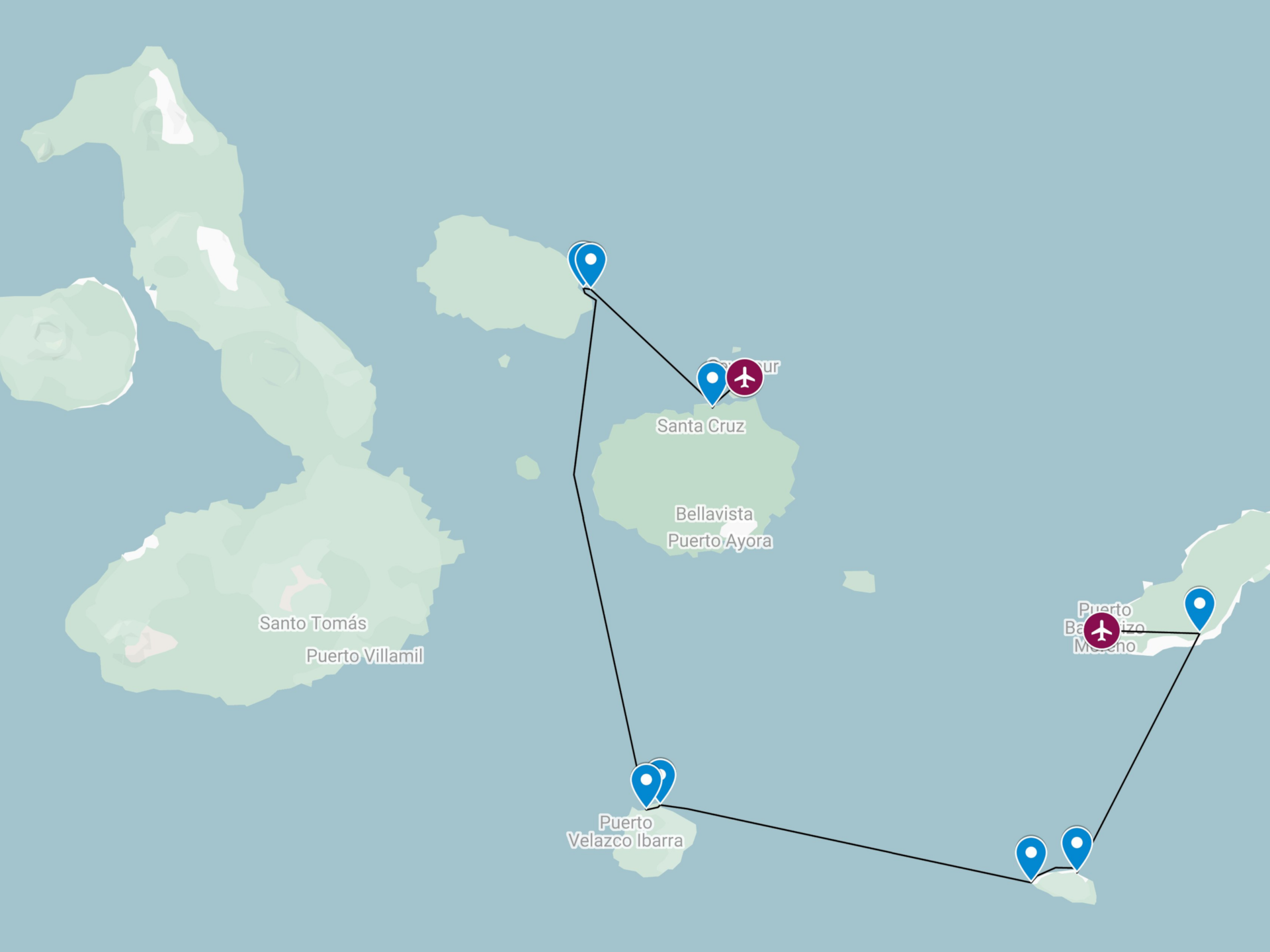
Itinerary B – Northeast (5 Days / 4 Nights)
Day 1: Arrival & Santa Cruz Highlands
AM: Arrival, Isla Baltra
Upon arrival Baltra, travellers pass through an airport inspection point to make sure that no foreign plants or animals are introduced to the islands, and to pay the park entrance fee of $200 (unless it has been prepaid). A guide will meet you, help you collect your luggage and escort you on a short bus ride to the harbour.
PM: Highlands, Isla Santa Cruz
The road to the highlands leaves from Bellavista, a small village located a 15-minute drive from Santa Cruz’ main town of Puerto Ayora. The road passes through the Galapagos’ most productive agricultural zone, up to the National Park boundary. We find Miconia vegetation at this altitude, changing to the Fern and Sedge zone as we ascend further. With clear weather, we can enjoy beautiful scenes of rolling hills and extinct volcanic cones covered with grass and lush greenery all year round. In the Highlands is El Chato Reserve, where Giant Galapagos Tortoises can be observed in the wild – the iconic species which gave the Galapagos Islands their name. Other species to see at this reserve include Short-Eared Owls, Yellow Warblers & Finches. More elusive species which can be difficult to spot here are Galapagos Rails & Paint-Billed Crakes.
Day 2: North Seymour & Mosquera
AM: Isla Seymour Norté
This islet is one of most visited sites in the Galapagos and it is teeming with birdlife. An easy circular path takes you through the archipelago’s most extensive colonies of blue-footed boobies and frigate birds. At the beginning of the breeding season, adult frigatebird-males blow up their vivid red pouches (gulas) to impressive football-sized balloons. This is one of the few spots where you can compare the magnificent and the great frigatebird breeding next to each other.
You are likely to come across several land iguanas on North Seymour and the coast can be a good place to spot Galapagos sealions.
PM: Isla Mosquera
Mosquera is a low white sand island which lies in the Itabaca Channel between Baltra Island (South Seymour) and North Seymour. It is surrounded by coral reefs, providing protected conditions for snorkelling and scuba diving. Above water, it has a large sealion colony and is good for spotting birds like America oyster catchers, blue-footed boobies and lava gulls.
Day 3: Darwin Bay & Prince Phillip's Steps
AM: Bahía Darwin, Isla Genovesa
Inside the submerged caldera of Genovesa lies Darwin Bay, whose diameter is more than 1.5 km (1 mile) and it is almost 200 m (650 ft) deep. The small area will surprise you repeatedly, walking along a coral sand beach, crossing barren lava formations and creeks, passing tidal pools, shrubs and further ahead following the top of some cliffs. With this peaceful surrounding, every species has occupied its own ecological niche (or habitat) without disturbing others. There is great birdlife here with starring species including Red-Footed Boobies, Great Frigatebirds & Laval Gulls. These often share the beach with Galapagos Sea Lions.
PM: El Barranco, Isla Genovesa
Before landing, you will take an inflatable dinghy-ride along the eastern arm of the caldera. As we approach, the soaring 25 m / 80 ft high walls become overwhelming. Sometimes, a Galapagos fur seal is resting or a seabird is nesting on one of the ledges at the base. You will then have to hike and overcome the steep stairs from the landing dock to a bush of palo santo shrubs on top. Red-footed boobies gratefully use these scarce nesting places so that they don’t have to nest on the rocky ground. Upon arriving at the edge of the rim, the bushes open up and you can enjoy panoramic views, a sea breeze and the amazing flying skills of countless seabirds. Following the exposed rim, you will first pass a place where we usually encounter a colony of Nazca boobies; and finally reach the extensive storm petrel nesting places. If you are lucky, you can spot the well camouflaged short-eared owl hunting for them on foot!
Day 4: South Plaza & Santa Fé
AM: Isla Plaza Sur
South Plaza is a beautiful island formed out of lava which bubbled up to the sea surface. It is relatively small but very diverse in its botany and very good for spotting Land Iguanas. hybrid Iguanas exist here, created through the mating of male marine iguanas and female land iguanas.
There are approximately 1,000 Galapagos Sealions on the island and birdlife is plentiful. Cliffs on the western side are nesting sites for Blue-footed and Nazca Boobies, whilst we can find Darwin's Finches amongst the rocks of the eastern side, Lava Gulls and lovely Swallow-tail Gulls. Red-billed Tropicbirds often swoop low overhead, whilst in the sea beneath the western cliffs we can often see schools of fish close to the surface.
This island can be one of the best for photography.
PM: Isla Santa Fé
Located in the southeastern part of the Galapagos, this island was formed from an uplift rather than being from a volcanic origin, which is why it is mostly flat. There are some theories claiming that this could be the oldest island in the archipelago. Santa Fé is home to a number of endemic species like the Galapagos Hawk, Galapagos snake, Galapagos mockingbird, rice rats and one of the two species of land iguanas on the islands. After disembarking into the beautiful and clear waters, you will be in contact with one of the many sea lion colonies. Along the trail, many saltbushes can be seen, as well some particularly impressive giant Opuntia cacti ‘trees’.
The island is some 24 km2 in area and a maximum 60 metres above sea level. The waters which surround it can be a lovely turquoise blue, with a protective barrier of rocks creating a semi-lagoon which is ideal for humans and sealions alike for swimming and snorkelling.
Day 5: Witch Hill & Departure
AM: Cerro Brujo, Isla San Cristóbal
The primary attraction of this site is the coral sand beach, an excellent place to swim and snorkel. Witch Hill is the remains of a tuff cone and one of the first sites visited by Charles Darwin. It has an impressive landscape, where it is often possible to see coastal and migratory birds, including pelicans, blue-footed boobies and swallow-tailed gulls. There are sealions and marine iguanas here too. At times, the lagoon is completely dry and deposits of salt can be found at the bottom. The people of Puerto Baquerizo Moreno used to use the lagoon as a salt mine.
PM: Departure, Isla San Cristóbal
Your guide and some crew members will accompany you back to San Cristobal where you will take the airport shuttle. Your guide will remain with you through check-in counters & the departure hall.
Itinerary C – Southeast (5 Days / 4 Nights)
Day 1: Arrival & Colorado Hill
AM: Arrival, Isla San Cristóbal
Land at San Cristobal airport where you will be directed towards the airport terminal building. You will need to queue here to pay your Galapagos National Park fee and have your luggage inspected for potential contaminants to the island, such as plant matter or seeds.
Please wait for you baggage to be unloaded. Collect it and then look for someone holding a card with your name or the name of your Galapagos yacht: Solaris
PM: Cerro Colorado, Isla San Cristóbal
Cerro Colorado Tortoises Protection and Growing Centre, located approximately 40 minutes by bus from the southeast of the island, was built to improve the status of the population of the island tortoises.
Also known as Galapaguera de Cerro Colorado, the centre includes a large corral, a Visitor Centre, breeding centre and an interpretative trail. Along this trail, it is possible to see different species of native and endemic plants as well as birds like the San Cristóbal mockingbird, yellow warblers, many species of finches and the Galapagos flycatcher.
Day 2: Gardner Bay & Suarez Point
AM: Bahía Gardner, Isla Española
The striking white beach at Gardner Bay is an important breeding site for Pacific green turtles. However, without doubt its main attraction is the Galapagos sea lion colony. Females stay year-round in this nursery, suckling their pups up to an age of 3 years, although they start to fish after 5 months of their birth. During the breeding and mating season, the colony becomes even bigger.
PM: Punta Suarez, Isla Española
Huge ocean waves crash onto the southern basaltic cliffs of Suarez Point, forming a spectacular blowhole. Where the water sprays metres high into the air (depending on the season, the tide and how strongly the sea breeze pushes the waves). This location is home to the only breeding colony of Waved Albatross in the Galapagos. You can also see wildlife such as marine iguanas, Nazca and Blue-Footed Boobies. Take your time for a meditative break in silence at this emblematic viewpoint and convert this unforgettable moment in a lifetime experience.
Day 3: Cormorant Point/Champion Islet & Post Office Bay/Baroness Lookout
AM: Punta Cormoran, Isla Floreana
The peninsula of Punta Cormorant (Cormorant Point) marks the extreme northern cape of Floreana – an island formed from smaller volcanic cones, covered now by tropical dry forest (palo santo). At the landing beach, you are likely to be welcomed by a small colony of Galapagos sealions. The green sand on this beach contains a high percentage of glassy olivine crystals which have been blown out by the surrounding tuff cones.
The ‘flour sand’ beach on the southern side of the peninsula is made up of white coral ground into sand by Parrotfish. It feels very smooth on the feet. You may be able to spot stingrays who use the sandy bottom to bury themselves. During the first months of the year, Pacific green turtles come ashore to dig a nest in which to bury their eggs.
AM: Islote Champion, Isla Floreana
Bottlenose dolphins frequently escort our passage to Champion Islet and you can see them from nearby jumping the bow wave. Underwater, Galapagos sea lions are playful acrobats that become the number one attraction. There are also lots of reef fish, and perhaps a green Pacific turtle. An inflatable dinghy ride along the shoreline of this islet offers sightings of lots of seabirds that are endemic to the archipelago, including Galapagos penguins, blue-footed boobies, magnificent frigate birds and red-billed tropicbirds, swallow-tailed gulls and lava herons. A birdwatcher’s dream is to get a glimpse of the Charles mockingbird on top of Opuntia cacti. This mockingbird is a scientific and historic key species, because it put Darwin on track of his theory of 'adaptive radiation'.
PM: Bahía Post Office, Isla Floreana
Post Office Bay is primarily of cultural significance. In times before there was a reliable postal service, a barrel onshore was a point where British 16th century whalers and poachers could post a letter. You are encouraged to write and address one or two post cards; whilst at the same time picking out any which are addressed close to your home, which you are happy to hand deliver when you return.
Shallow waters offshore are lovely to swim in. If you doon a mask and snorkel, you might see Pacific green turtles which often graze here.
PM: Mirador de la Baronesa, Isla Floreana
Baroness Lookout is a tuff in Floreana close to Post Office Bay. There are great Mangrove Forests here and a beautiful coastline where you can hope to have great marine life encounters with Sea Lions, Turtles & possibly Galapagos Penguins.
Day 4: Sullivan Bay & Bartholomew
AM: Bahía Sullivan, Isla Santiago
Setting foot at the lava stream covering Sullivan Bay is like landing on the moon. The desolate, stretched out lava fields seem mostly lifeless, but there is plenty to see on this highly popular site, with lots to photograph. Pacific green turtles seasonally bury eggs in the tiny white sand beach, where you might also encounter crabs, a stray blue heron or an American oystercatcher. On the lava flows sparse pioneer vegetation such as lava cacti and carpetweed are able to grow. You might also encounter a lava lizard, locusts or a small species of snake called the Galapagos racer.
PM: Isla Bartolomé
One of the Galapagos’ most iconic locations, the beautiful volcanic islet of Bartolomé is among the youngest islands in the archipelago. On a geological scale Bartolomé was only recently born out of volcanic activity. Although at first sight lifeless, Bartolomé offers some of the wildest landscapes and best panoramas of the entire archipelago. To enjoy the postcard view of the idyllic Pinnacle Bay, you have to climb steps to a viewpoint on top of the island (114 m / 375 ft). Enter a dramatic world of threatening (though extinguished) nearby spatter cones, craters, and lightweight lava droplets that have been spewed out by fiery fountains. The Summit Trail is also ideal for witnessing how scanty pioneer vegetation such as lava cacti manage to take root on the bare virgin lava fields.
Day 5: Black Turtle Cove & Departure
AM: Caleta Tortuga Negra, Isla Santa Cruz
Black Turtle Cove offers engineless activities, so you will explore it by dinghy, paddling across the mangrove forested coastline of this stretch of Santa Cruz. There is great wildlife here due to the high levels of protection of this environment such as Sea Turtles, Pelicans & Sharks.
PM: Departure, Isla Baltra
Your guide & some crew members will go with you to Baltra where you will board the airport shuttle. Your guide will remain with you through the check-in counters & departure hall.
Dates
Baltra – Solaris Itinerary B – San Cristobal
From price per person
Contact Us for all cabin prices & availability
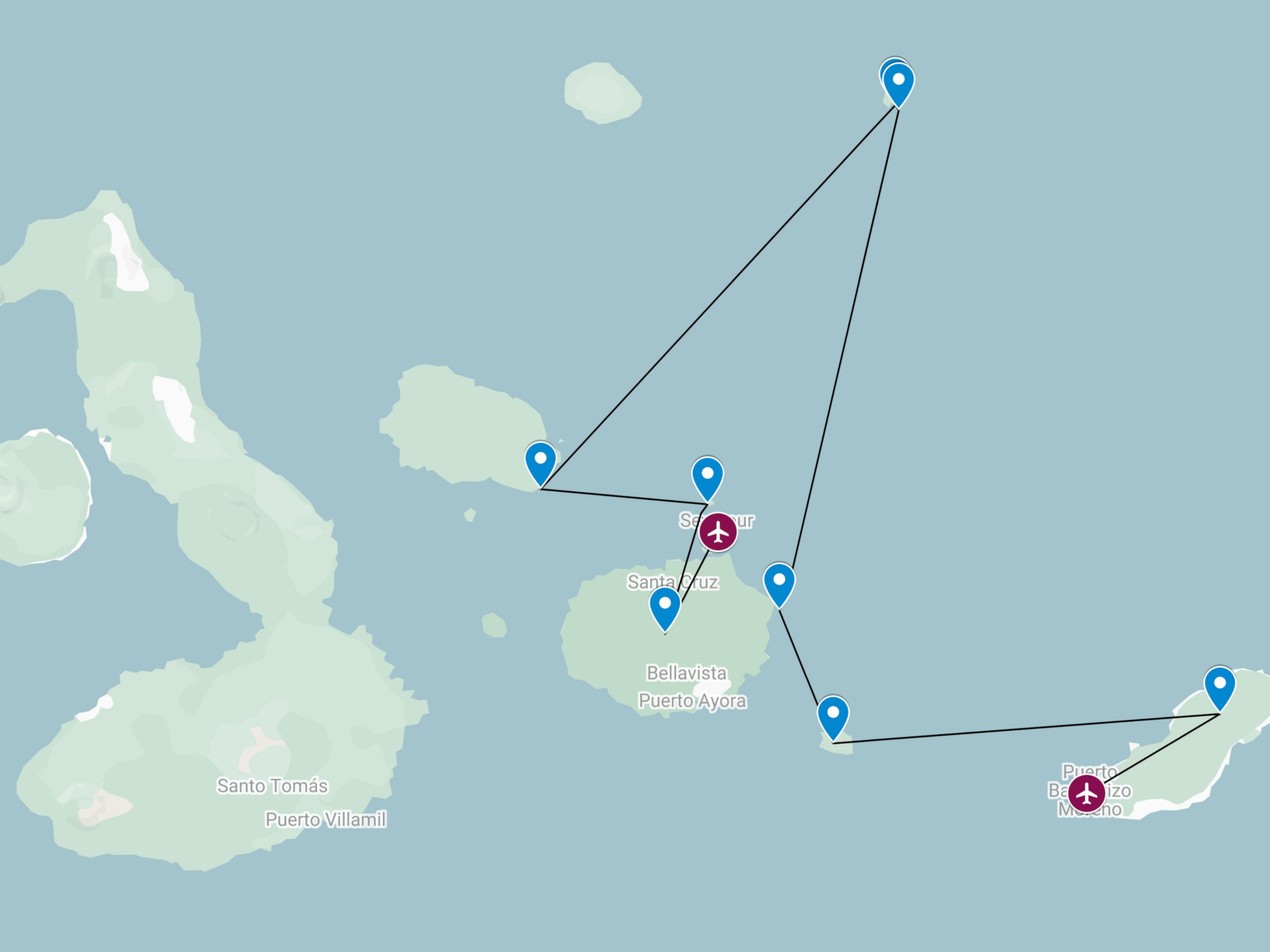
San Cristobal – Solaris Itinerary C – Baltra
From price per person
Contact Us for all cabin prices & availability
Baltra – Solaris Itinerary A – Baltra
From price per person
Contact Us for all cabin prices & availability
Baltra – Solaris Itinerary B – San Cristobal
From price per person
Contact Us for all cabin prices & availability
Baltra – Solaris Itinerary A – Baltra
From price per person
Contact Us for all cabin prices & availability
Baltra – Solaris Itinerary B – San Cristobal
From price per person
Contact Us for all cabin prices & availability
San Cristobal – Solaris Itinerary C – Baltra
From price per person
Contact Us for all cabin prices & availability
Baltra – Solaris Itinerary A – Baltra
From price per person
Contact Us for all cabin prices & availability
Baltra – Solaris Itinerary B – San Cristobal
From price per person
Contact Us for all cabin prices & availability
San Cristobal – Solaris Itinerary C – Baltra
From price per person
Contact Us for all cabin prices & availability
Baltra – Solaris Itinerary A – Baltra
From price per person
Contact Us for all cabin prices & availability
Baltra – Solaris Itinerary A – Baltra
From price per person
Contact Us for all cabin prices & availability
Baltra – Solaris Itinerary B – San Cristobal
From price per person
Contact Us for all cabin prices & availability
Baltra – Solaris Itinerary B – San Cristobal
From price per person
Contact Us for all cabin prices & availability
San Cristobal – Solaris Itinerary C – Baltra
From price per person
Contact Us for all cabin prices & availability
Baltra – Solaris Itinerary A – Baltra
From price per person
Contact Us for all cabin prices & availability