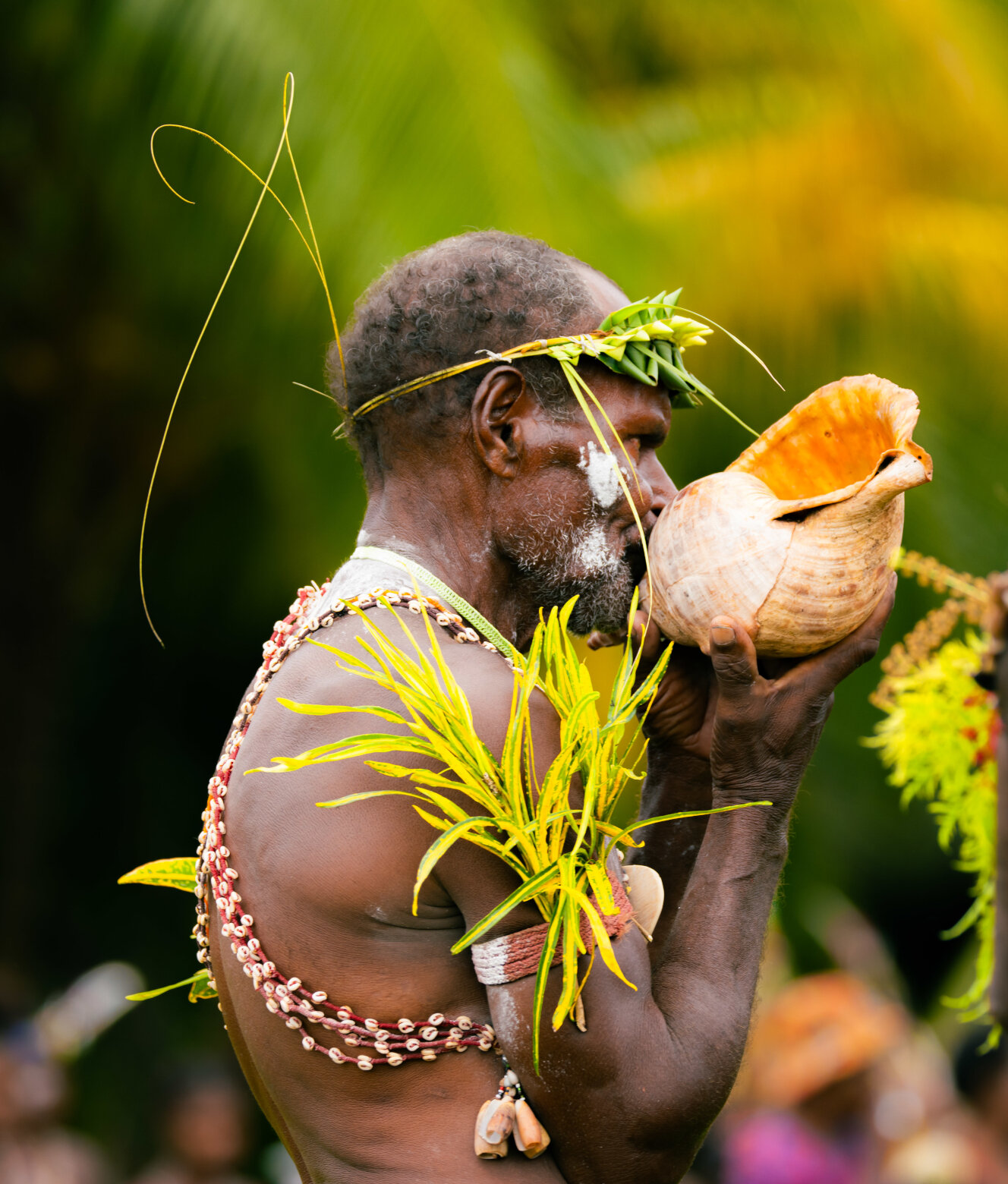
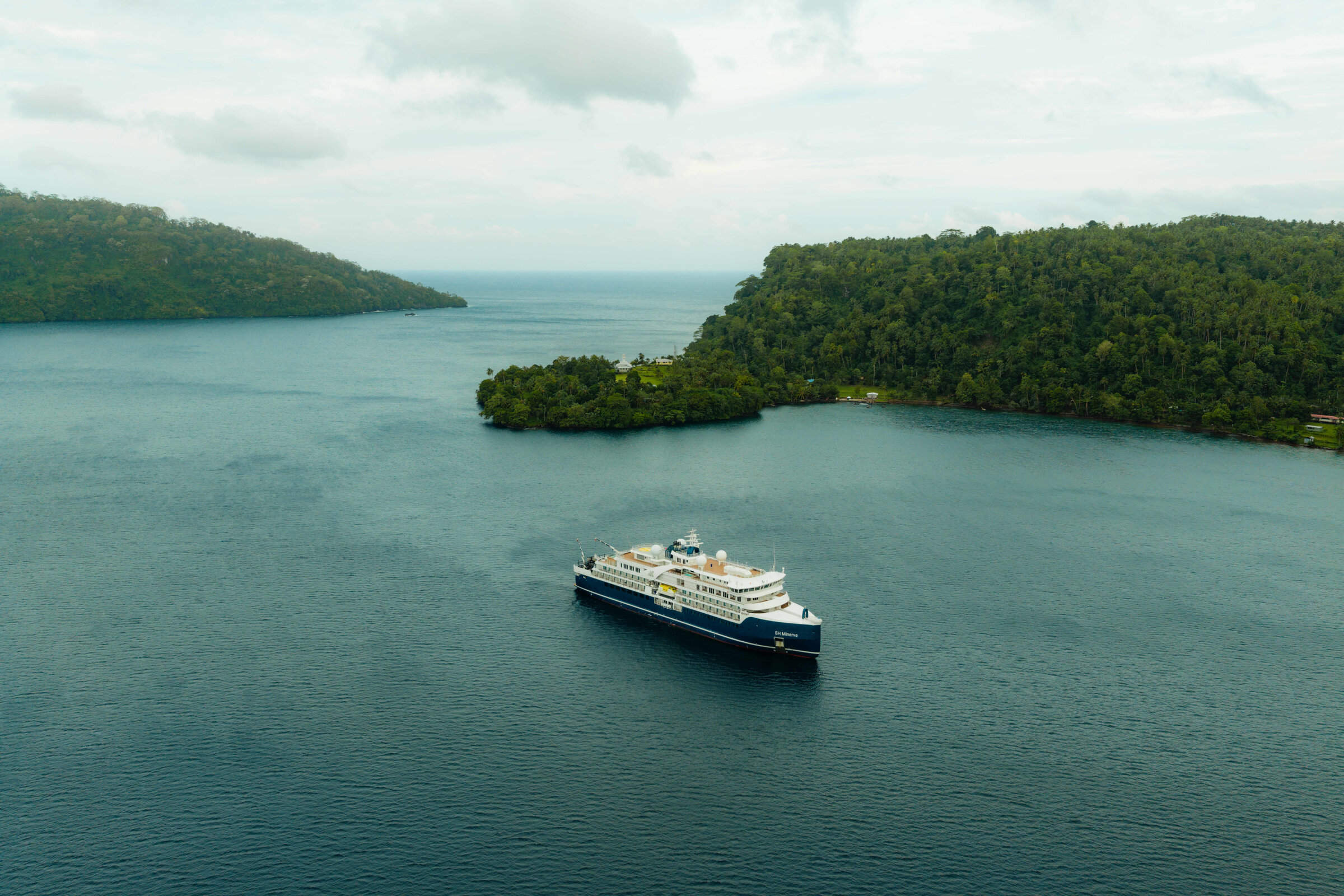
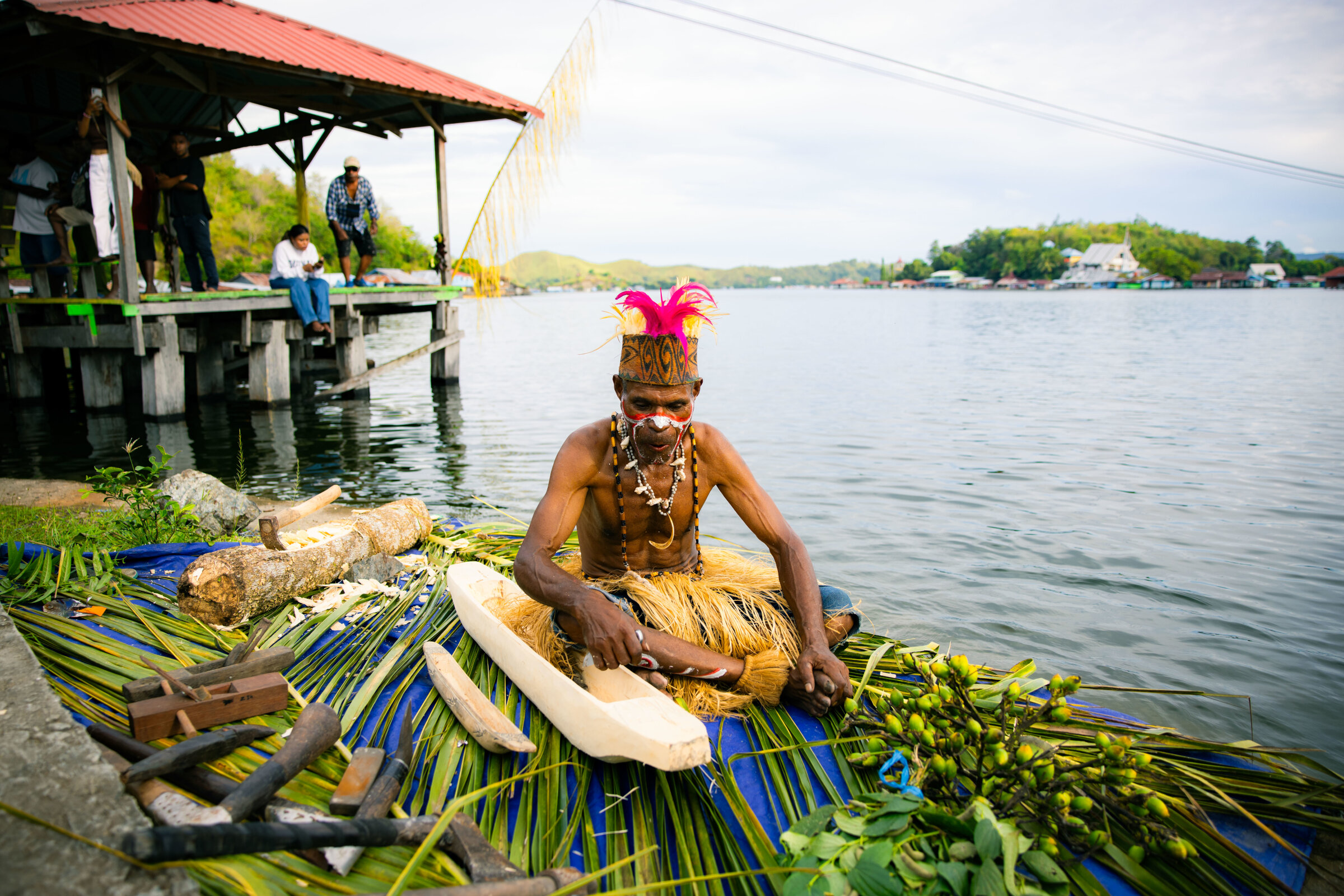
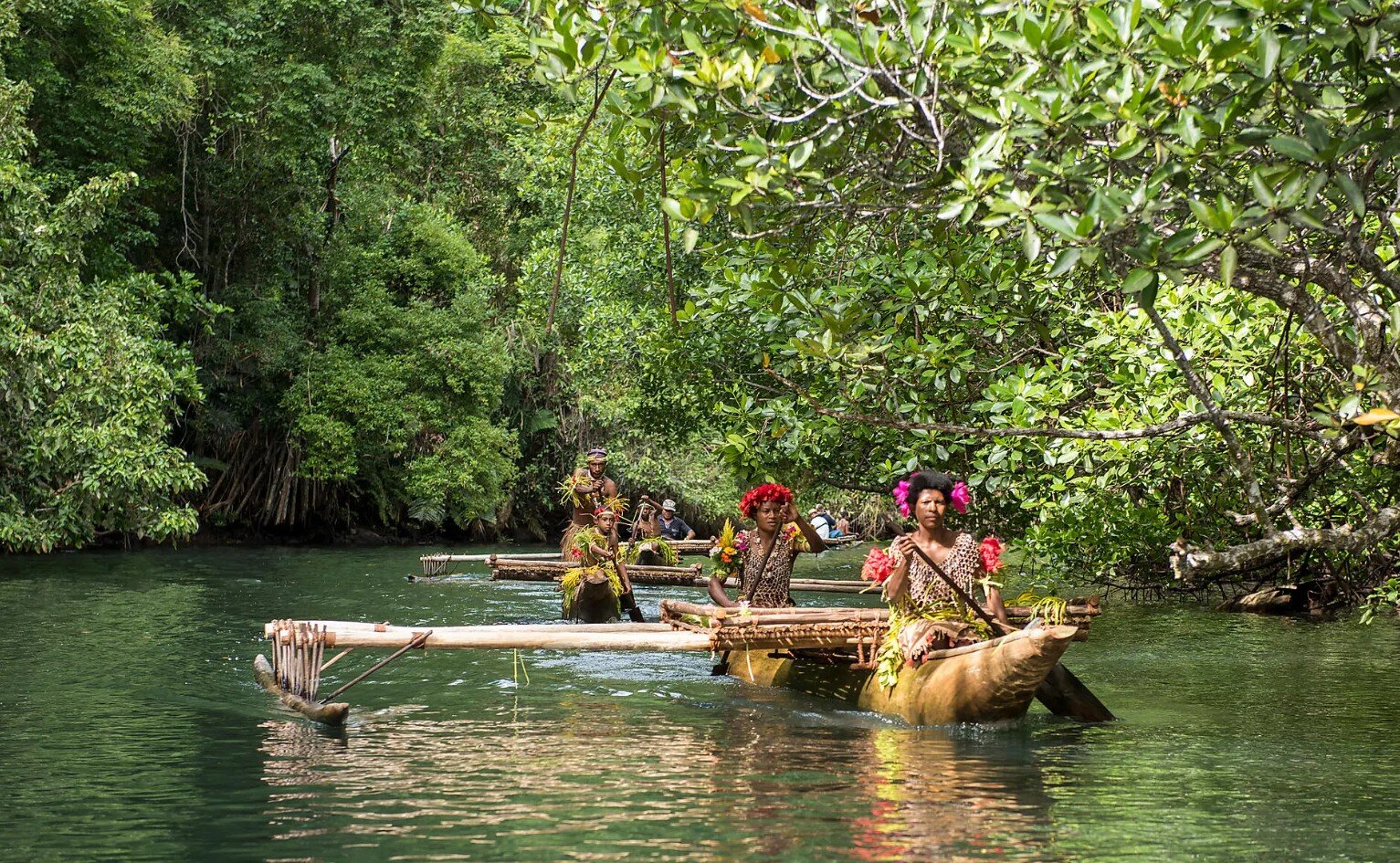
Today you will explore Buka Town, the administrative centre of Bougainville. Bougainville’s identity is strong and local, with many distinct languages and traditions, and a matrilineal culture where women are central to land and clan life. This is also a place in political transition. In the 2019 referendum, Bougainville voted overwhelmingly for independence, and might soon become the world's newest country.
Embark on a unique voyage aboard a luxury cruise ship as you discover the rich culture and remote beauty of Papua New Guinea and the eastern Indonesian archipelagos. This memorable journey takes you deep into one of the world’s last great frontiers; a remote region that is home to more than 700 distinct ethnic groups, striking volcanic landscapes, and some of the most biologically diverse marine environments on Earth.
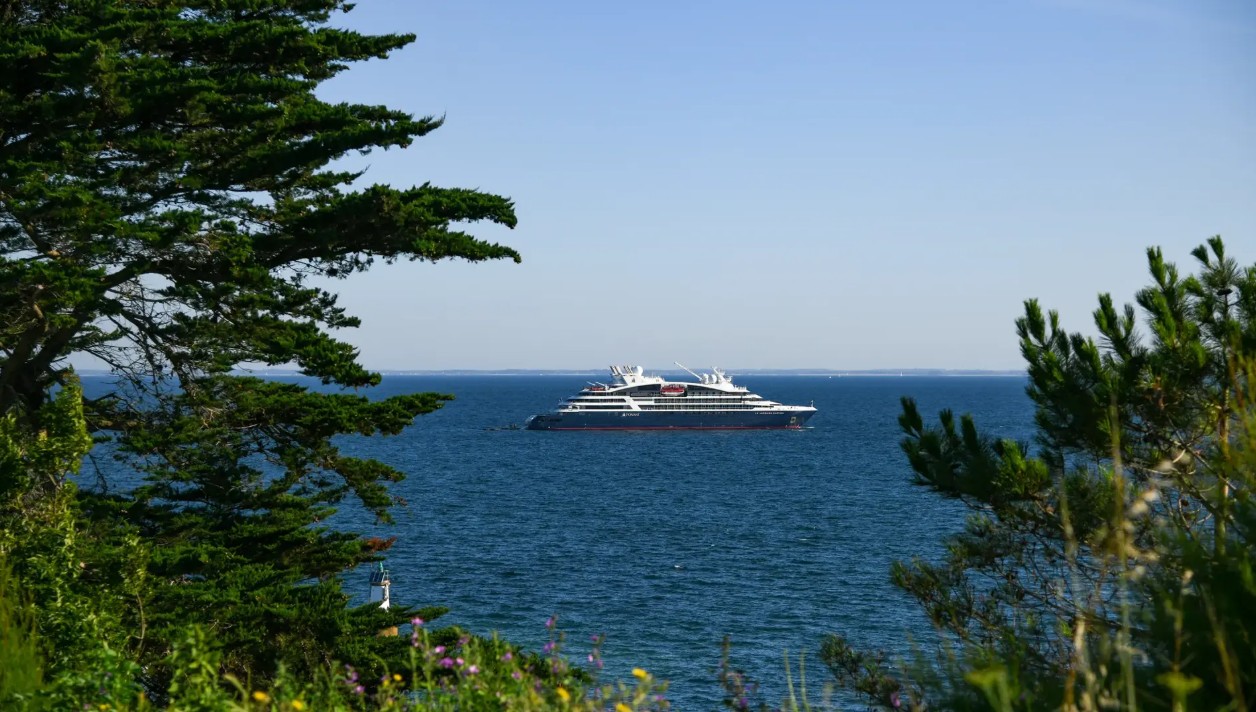
You will explore along the northern coast of Papua New Guinea where you can enjoy traditional welcomes to remote villages, snorkelling in turquoise reef-fringed bays, zodiac cruises in the Sepik River and guided visits to historical sites. Some of the places you may visit include the coastal town of Alotau, filled with deep-rooted history shaped by missionaries, miners, and the important WWII Battle of Milne Bay; Tufi, where you can enjoy the breathtaking volcanic fjords and interact with local Papuan tribes who will share their ancient customs, spiritual beliefs and artistic traditions; a visit to the remote Tami Islands will provide a rare glimpse into a community famous for its intricate carvings and seafaring culture.
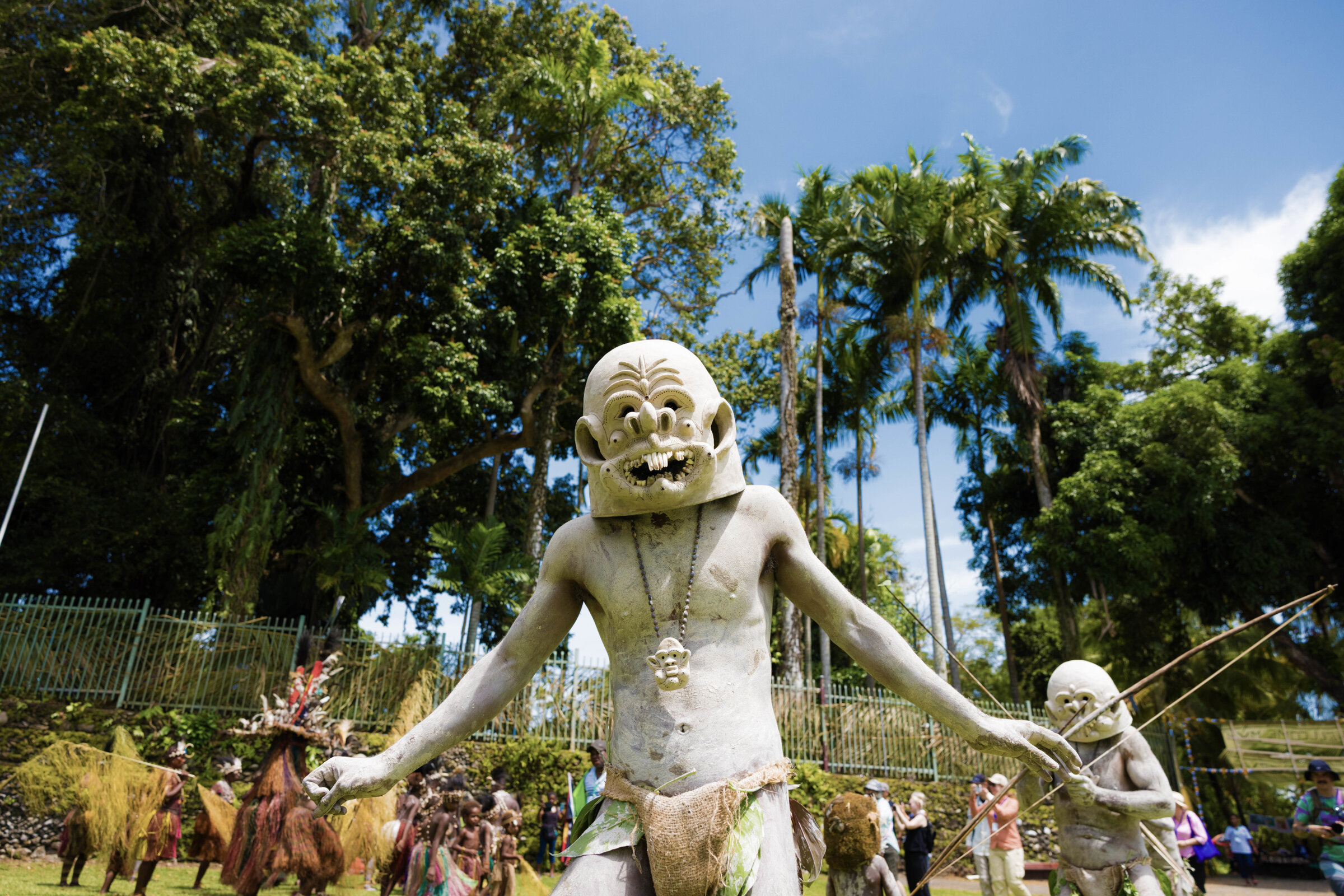
As you sail north to Madang, once considered the most beautiful city in the South Pacific, you can watch traditional “sing sings.” This may include a performance by the iconic Asaro Mudmen, known for their striking clay masks and ceremonial dances. At the mouth of the Sepik River, explore the riverside village of Kopar, where daily life continues in harmony with the water and the crocodile is revered as a powerful spirit. In Jayapura, cross into Indonesian Papua and enjoy a cultural exchange with local villagers living on Lake Sentani, famous for its tapa cloth production.
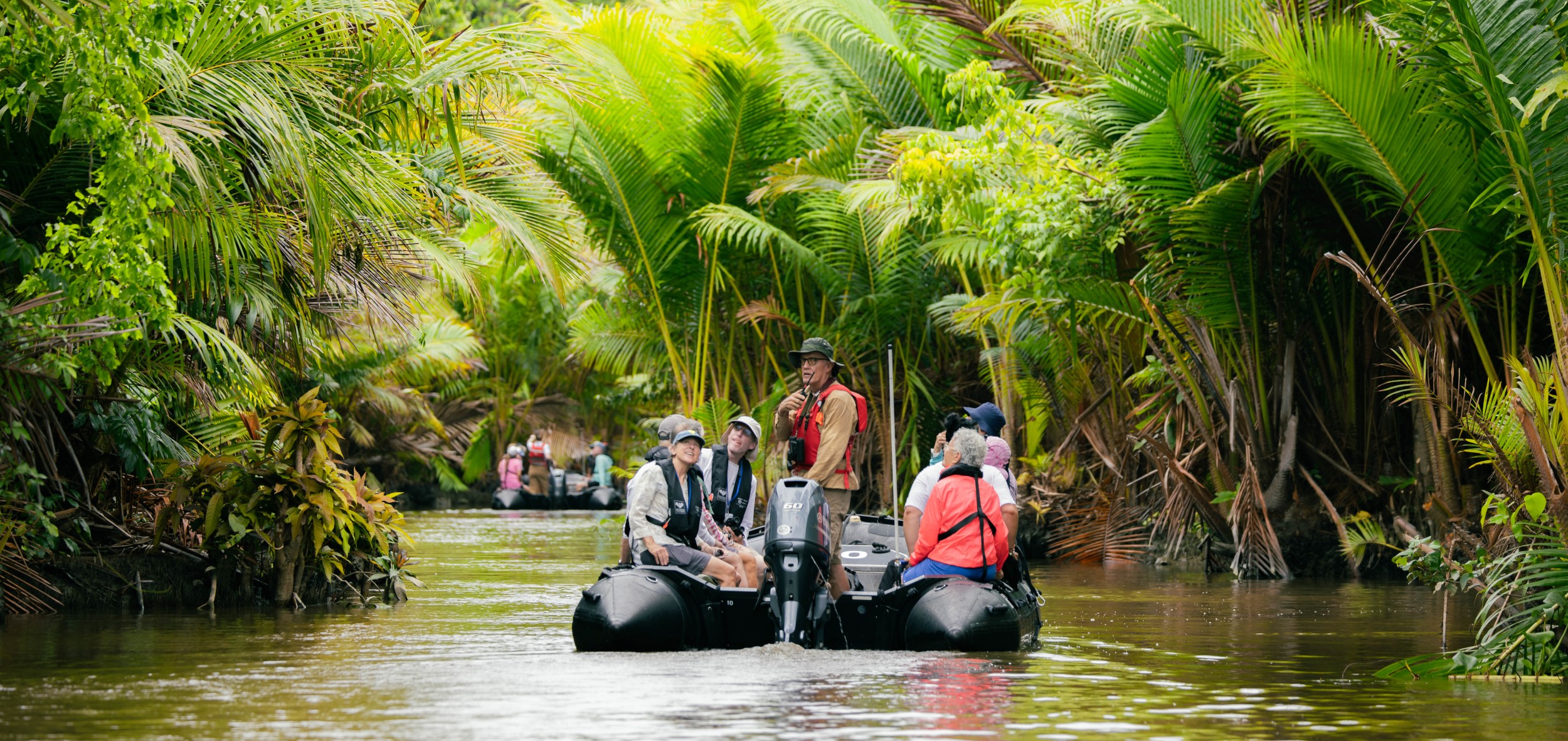
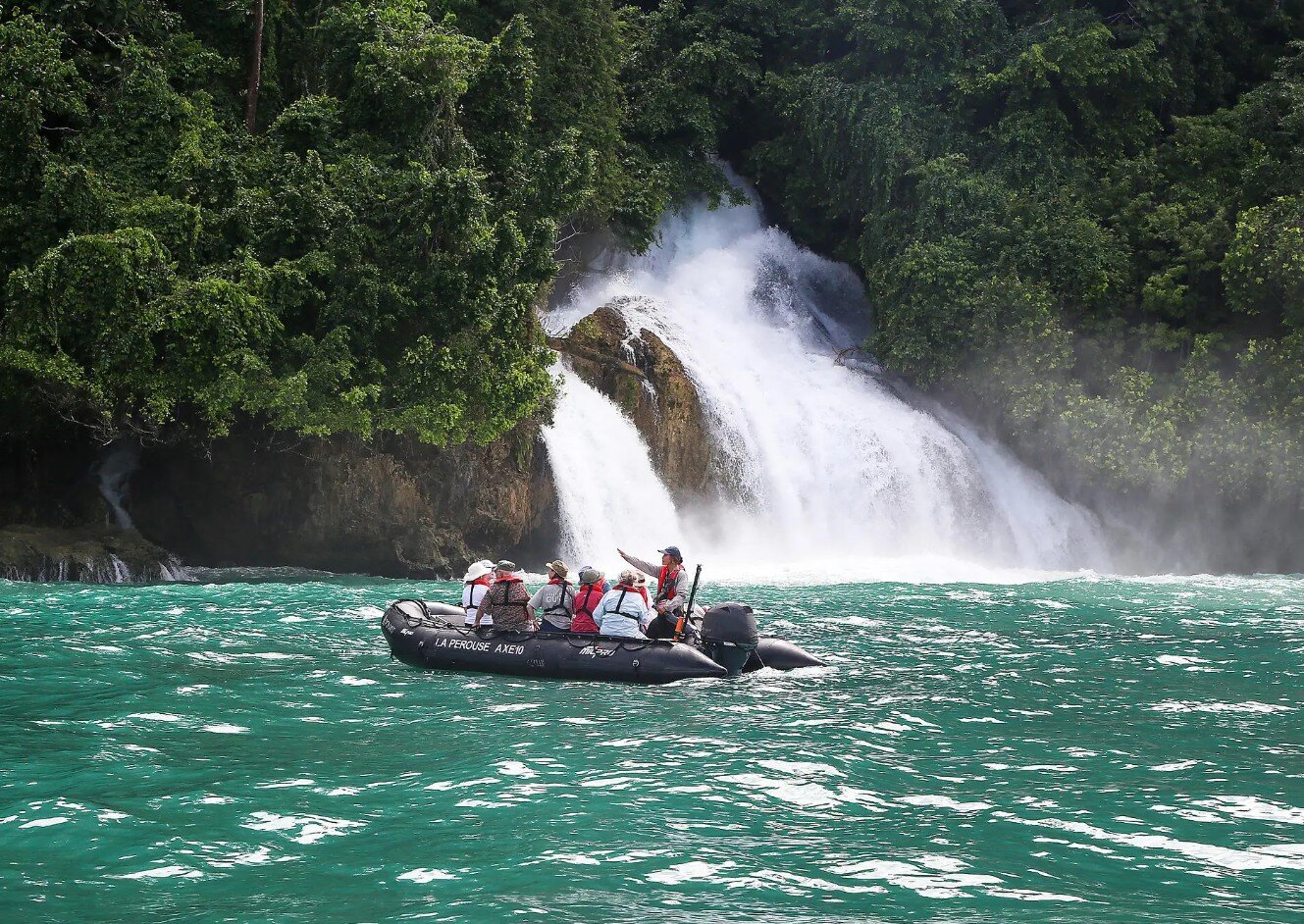
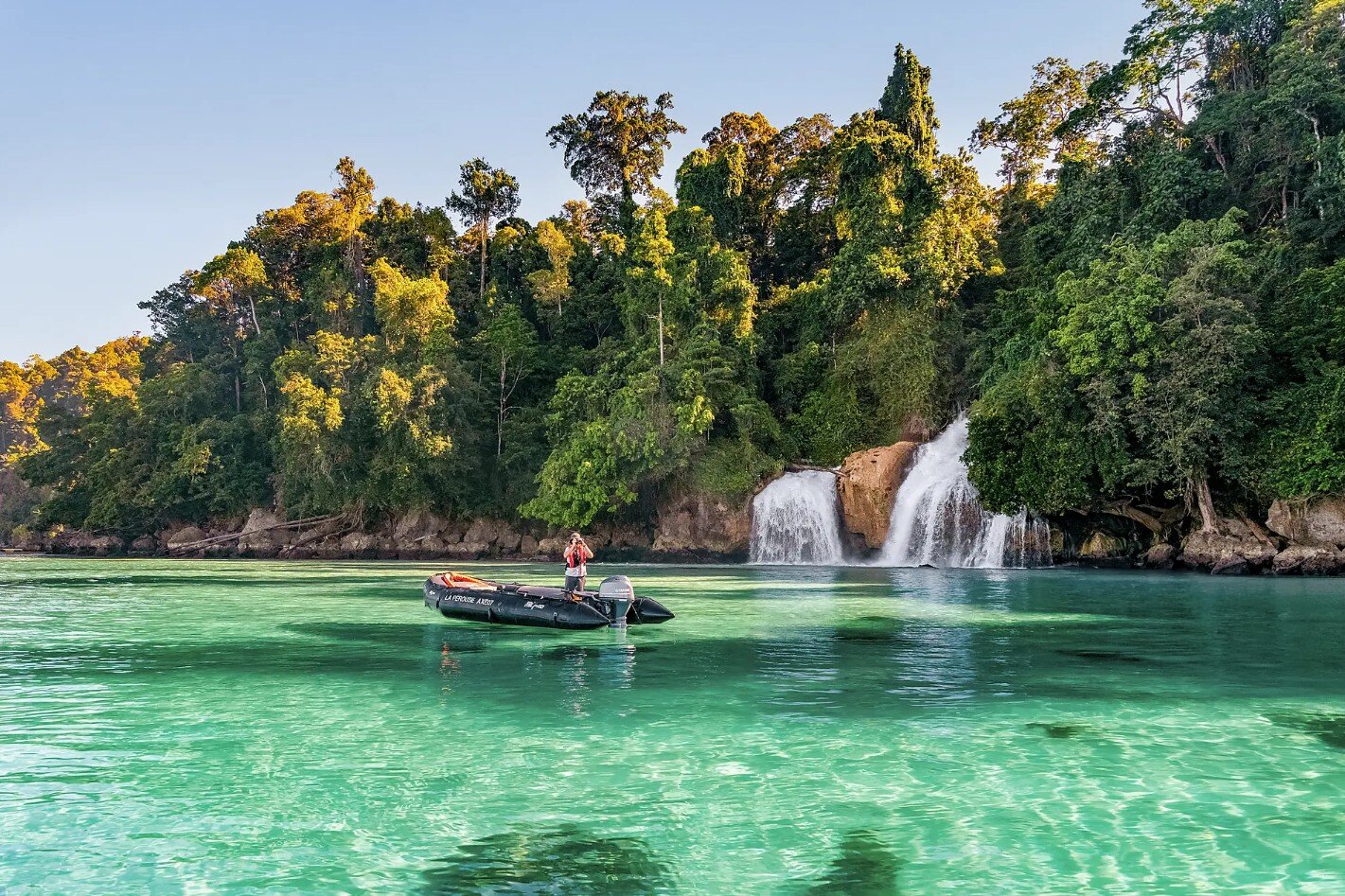
Moving westward, the journey takes you into the heart of the Coral Triangle, where some of the planet’s richest marine ecosystems provide the most magnificent opportunities to dive (PADI Advanced or equivalent) or snorkel. Depending on your chosen itinerary, you may visit the jungle-fringed Kitikiti Waterfall and explore the karst wonderland of Triton Bay by Zodiac. Here, forest-covered limestone islands rise from clear turquoise waters. Triton Bay and nearby Cenderawasih Bay are home to some unique species of coral fish, with the possibility of seeing whale sharks in Cenderawasih.
Itinerary
New Guinea Odyssey Cruise: Darwin - Cairns (September 2026)
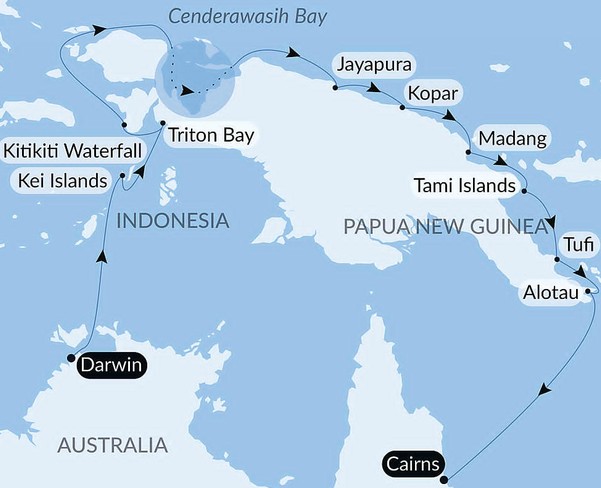
Day 1: Darwin
Darwin, the capital and largest city of Australia’s Northern Territory, is a lively tropical centre. This multicultural city has residents from more than 50 cultural backgrounds, all contributing to its well-known friendly and relaxed lifestyle. You will embark your expedition cruise ship this afternoon, setting sail later this evening.
Day 2: At Sea
You will spend today at sea crossing from Australia to the Maluku Islands. During your time at sea you can make the most of the many services and activities on board, such as the spa, fitness centre, swimming pool or a spot of sunbathing. Lovers of the open sea will be able to visit the ship’s upper deck to admire the spectacle of the waves and perhaps be lucky enough to observe marine species.
Day 3: Kei & Maluku Islands
Today, you will arrive at the white sand beaches of the Kei Islands. The local people are known for their warmth and hospitality. Alongside their Christian faith, they proudly maintain a rich and unique cultural heritage. Local history states that the ancestors of today’s Kei islanders came from Bali, which was once part of the powerful Hindu Majapahit Empire. You can spend the day swimming and snorkelling in the crystal-clear waters of a beautiful tropical island.
Day 4: Triton Bay
Triton Bay is one of three regions in Indonesia’s West Papua province that make up the famous Bird’s Head Seascape, along with Raja Ampat and Cenderawasih Bay. Marine biologists recognise the Bird’s Head as the centre of the Coral Triangle with more fish and coral species than anywhere else on Earth. Its incredible biodiversity, high level of unique species, rich habitats and relatively intact ecosystems make it one of the world’s greatest areas of tropical marine wilderness. Explore the area with your expedition team on a zodiac cruise through stunning karst or mushroom islands covered in rainforest; then dive into the lively underwater world full of life.
Day 5: Kitikiti Waterfall
Today you will explore within the Indonesian province of West Papua today - specifically on the Bomberai Peninsula and in Sebakor Bay. Here, you will be able to admire the stunning coastlines, complex karst formations, and rich marine life, as well as the Kitikiti Waterfall, where you can enjoy a swim or snorkel surrounded by lush nature, both on land and underwater.
Day 6: At Sea
You will spend today at sea, perhaps enjoying a spa treatment or making use of the ship's swimming pool. Be sure to spend some time out on deck watching the world go by.
Day 7: Cenderawasih Bay
This afternoon you will reach the western end of New Guinea island and Cenderawasih Bay, located south-east of the Bird's Head Peninsula. Covering more than 1.4 million hectares the bay and is home to several uninhabited islands and diverse coral reefs. The abundance of food found near the floating fishing platforms, called bagans attract the world’s largest fish: the Whale Shark. Over the years the whale sharks have learnt the habits of local fishermen who catch baitfish at night in these bagans. Whale sharks have become visitors, drawn to feed on the baitfish that spill from the nets near the surface. Conditions permitting, you might have the opportunity to swim with them.
Day 8: At Sea
You will spend today at sea - enjoy a chance to unwind, reflect on your journey so far and take full advantage of the ship’s facilities and onboard activities.
Day 9: Jayapura
Today focuses on the modern industrial provincial capital of Papua province, Jayapura. This modern industrial city contrasts with the surrounding hinterland where Papuan tribes live a subsistence lifestyle. The majority of Jayapurans are transmigrants from western Indonesia who control most of the industry and economics of the region. Later in the day you will leave the city and travel to the traditional village of Asai on Lake Sentani, a place known for its production of Tapa cloth. Here you can enjoy a cultural performance and witness life in a traditional Papuan village.
Day 10: Kopar
Today you will visit the village of Kopar, located at the mouth of the Sepik river in Papua New Guinea. The people of the Sepik region speak more than 250 languages and are bound together through intricate systems of trade and shared cultural traditions. The crocodile is honoured as the water spirit in the Sepik Province where the men’s spirit house serves as the hub for important village decisions, boys’ initiation rites, and ceremonies to pay respect to the spirits. You will be welcomed ashore with a traditional ceremony and cultural performance that includes the famous Dragon Dance. There will also be a chance to walk through the village of Kopar and witness the rhythms of traditional life in the lower Sepik.
Day 11: Madang
Today you will explore Madang Township - once known as the ‘prettiest town in the South Pacific’ and is well-known for the Madang festival with its colourful displays of “sing sings” performed by different cultural groups from across the Madang Province - set on a picturesque peninsula, the area is a showcase of lush parks, winding waterways, towering shade trees, and glittering tropical islands. The diverse geographical nature of Madang province is reflected in the 170 different languages that are spoken. Today, you can enjoy several cultural performances showcasing the local customs, costume and dance of the coastal, midland and highland communities.
Day 12: Tami Islands
Today you arrive at the seldom visited Tami Islands (Kalal, Wanam & Idjan). These are a group of uplifted coral atolls, with two main villages on the two larger islands and many smaller reefs and cays. In the centre is a beautiful, crystal-clear blue lagoon with lots of incredible marine life and stunning coral formations. Tami Islanders are renowned artisans and are most famous for their intricately decorated bowls.
Day 13: Tufi
Today you will explore Tufi, sometimes known as the 'Scandinavia of the tropics'. The region is perhaps most famous for its fjords which plunge over 90 metres deep and rise over 150 metres vertically above the water making for a spectacular backdrop. Traditional village life remains deeply rooted among the people, many of whom live in remote communities along the Cape Nelson coastline and the slopes of Mount Trafalgar. The area is known for its production of tapa cloth, made from the bark of the paper mulberry tree and skilfully decorated. People often travel into the ancient mangrove forests of the fjords to witness one of the most colourful traditional performances in all of Papua New Guinea. You will also have opportunity to swim and snorkel in the calm and clear waters of Kamoa Beach.
Day 14: Alotau
Today you will reach the provincial capital of Milne Bay, Alotau. This port town has a population of approximately 16,000 and serves as the journeys port of entry into Papua New Guinea. Missionaries, miners, pearlers, Japanese, American warships and most of all the Battle of Milne Bay have all contributed to the History of Milne Bay. It was in this location that the invading Japanese army suffered their first land defeat in the Pacific War in 1942. Alotau is considered one of the most easy-going towns in the whole of Papua New Guinea with local people being very warm and welcoming. You can explore the area with your expedition team, perhaps taking a tour of the town markets and WWII memorials.
Day 15: At Sea
You will spend a final day at sea crossing from Papua New Guinea to Australia. Be sure to spend some time out on deck watching for marine life, enjoy a swim or spa treatment or simply relax and enjoy the journey.
Day 16: Cairns
You will disembark this morning in the harbour town of Cairns on Australia's north-east coast. The hills surrounding Cairns form the gateway to the Queensland Rainforests, proclaimed a UNESCO World Heritage site for their fauna and flora from the Gondwana era.
Day 1: Arrive in Brisbane
You will arrive into Brisbane today and will have an included hotel night in the city.
Day 2: Fly to Honiara, Solomon Islands
Today you will take a flight from Brisbane to Honiara, the capital of the Solomon Islands. Located on the northeastern coast of Guadalcanal at the mouth of the Mataniko River, Honiara is a relatively new city which grew up around a U.S. military base during and after WWII. In 1952 it superseded Tulagi as the premier city of these islands. Honiara’s U.S. War Memorial provides a comprehensive war-history lesson of the area. Today the town is laid-back and relatively tourist free with a real-life atmosphere. This afternoon you will embark your expedition cruise ship ready to begin your adventure.
Day 3: Kasolo Island (Kennedy Island)
Today you will explore Kennedy Island, (also Kasolo or Plum Pudding Island), a tiny forested islet named after John F. Kennedy. In August 1943, after their craft was rammed by a Japanese destroyer, the crew of PT-109, led by Lieutenant Kennedy, abandoned ship, swam ashore, before making their way to nearby Olasana Island. Kasolo Island's lush rainforests are home to the Solomon Islands fruit dove, the Solomon Islands honeyeater and the Solomon Islands flying fox
Day 4: Buka Town, Buka Island
Today you will explore Buka Town. You will be driven to Kubu, an area that is home to the Bougainville House of Representatives where you will be formally welcomed through the “Tsutsu” ceremony, a traditional Bougainvillean cleansing ritual, which represents the setting aside of past hardship and the establishment of mutual respect and goodwill between host and guest. You can also enjoy cultural performances by four different groups, representing different parts of Bougainville and the iconic bamboo band.
Day 5: Rabaul
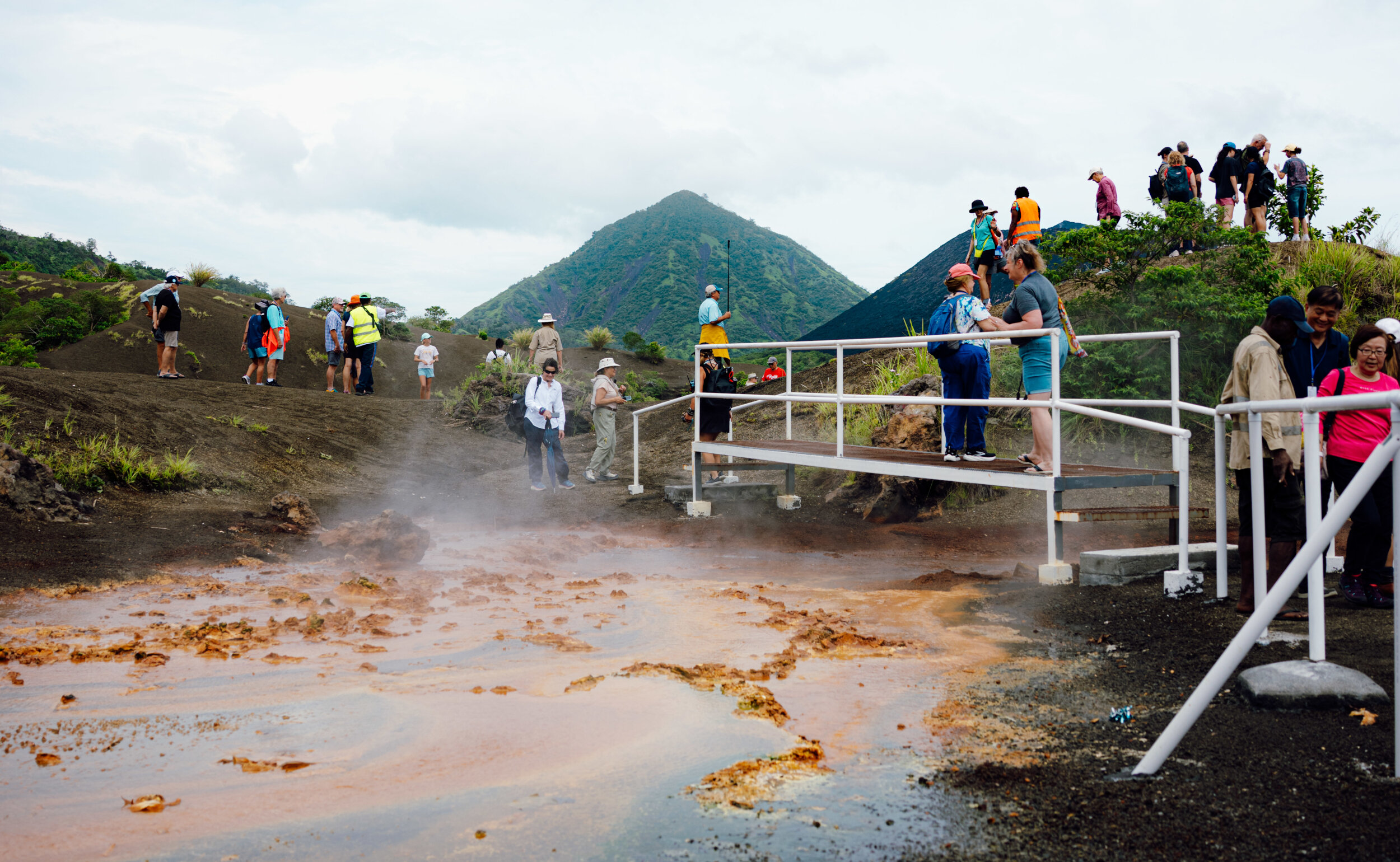
Today you will arrive into Rabaul, the former capital of Papua New Guinea’s New Britain island. Located inside a flooded caldera, the town’s proximity to a volatile volcano – plus aerial bombardment during World War II – has forced it to rise from the ashes more than once. Most recently the town was rebuilt after widespread destruction caused when Mount Tavurvur erupted in 1994. You can visit the remarkably well-preserved Japanese barge tunnels, Rabaul Volcano Observatory and the Rababa Hot Springs.
Day 6: Telele Islands
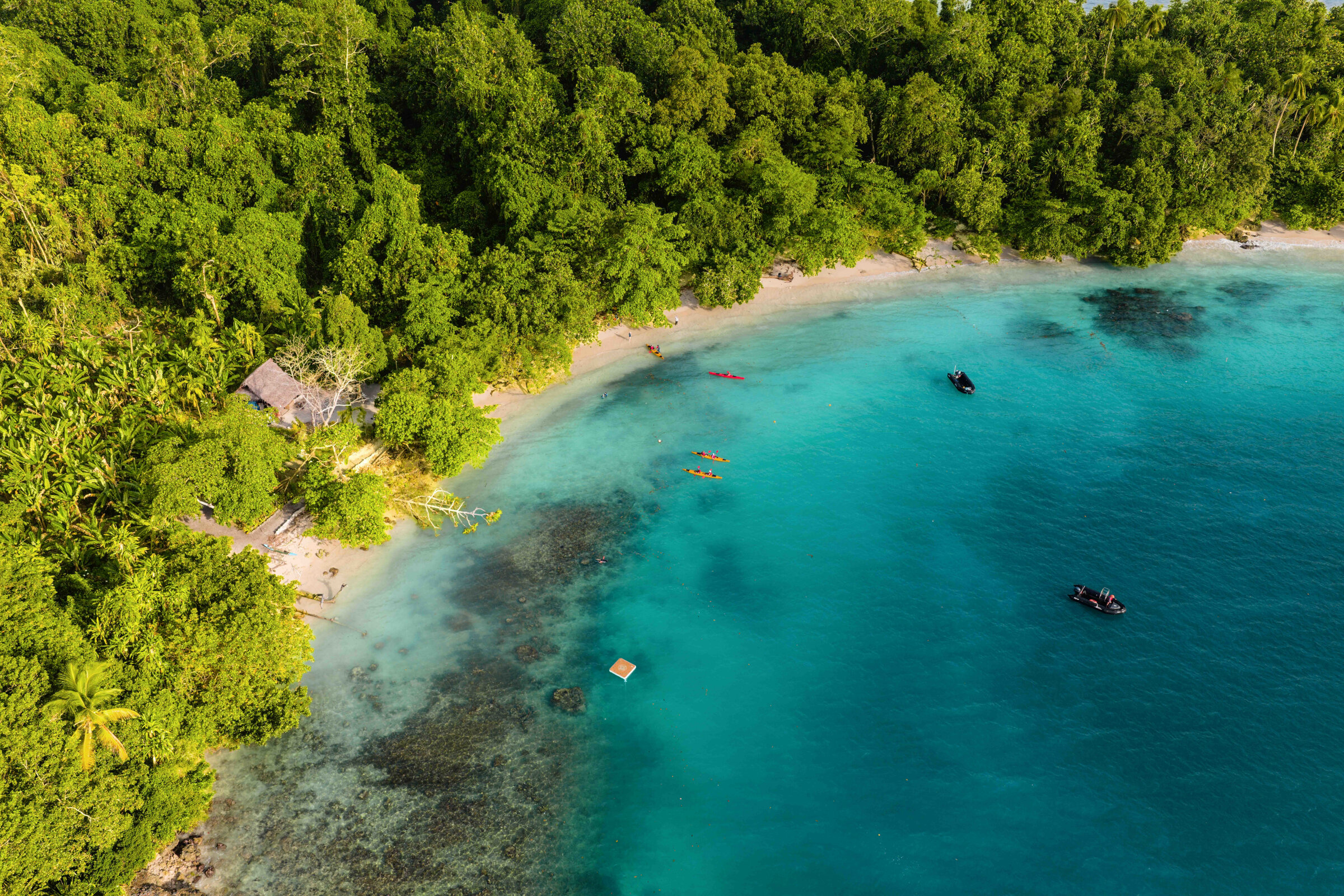
Today you will visit the uninhabited and rarely visited Telele Islands in East New Britain are a nationally protected territory surrounded by coral reefs and clear tropical waters, where you can enjoy opportunities for snorkelling, kayaking, and observing marine life.
Day 7: Garove Island
Tiny, far-flung Garove is part of the Vitu Islands in the Bismarck Sea and is defined by its rich marine biodiversity. The island wraps around a massive, horseshoe-shaped flooded caldera. You will land near the village where you can meet the locals and enjoy a traditional welcome, before exploring some of the island including the catholic church and enjoy coastal views from the elevated headland. Nearby dive sites reveal multi-hued fish darting among sea fans and anemones, while reef sharks, schooling jacks, and barracuda patrol the deep. Back on dry land, tiny villages nestle amid towering coconut palms.
Day 8: Tab Island, Tami Islands
A tiny gem of the Bismarck Archipelago, this island, also referred to as Pig or Gosem Island, is known for its natural beauty. Its sheltered waters and tropical setting offer opportunities for snorkelling, kayaking, and close observation of island life in one of the South Pacific’s most biodiverse regions. The Tami Islands are a small group of uplifted coral atolls lying in the Huon Gulf, south of Finschhafen in Morobe Province. The three principal islands, Kalal, Wanam and Idjan, are surrounded by smaller reefs and cays and encircle a striking, crystal clear blue lagoon renowned for its abundant marine life and vibrant coral formations. Only two of the islands are inhabited, with the main settlement located on Tami (Kalal) Island, where a small, self-sufficient community lives closely connected to the surrounding sea. Coconut and areca palms, frangipani and coastal broadleaf trees fringe the shoreline, giving the islands a lush and colourful appearance, while the sheltered lagoon provides calm waters ideal for snorkelling and Zodiac access.
Days 9 - 10: Madang
Madang is a laid-back port town exuding a village vibe, presents a captivating blend of Pacific war history and natural beauty. The surrounding waters host coral reefs teeming with marine life. Rocky hiking trails traverse Mount Wilhelm, offering panoramic views, extending the allure beyond the town. The town is perhaps best known for the Madang Cultural Festival hosted once a year with around 10-15 cultural groups from Papua New Guinea's highlands, coasts and island regions coming together to perform dances and demonstrations. You can enjoy a visit to Krangket Island, a small, low-lying coral island, long inhabited by the Krangket people, who are part of the wider Bel cultural group of Madang Lagoo. Here you can join your expedition team and local youths on a nature walk and swim in the sheltered bay.
Day 11: Kopar Village, Sepik River & Ali Island
Kopar Village, nestled along the Sepik River in Papua New Guinea, is a vibrant community renowned for its rich cultural traditions and elaborate riverine art. The village offers a unique window into the lives of the Sepik people, famous for their intricate spirit houses, woodcarvings, and ceremonial rituals. Surrounded by lush tropical rainforest and winding waterways, Kopar is a place where culture and nature blend seamlessly, providing an unforgettable glimpse into one of the world’s most fascinating river cultures.
Ali Island combines quiet natural beauty with a sense of cultural heritage. Reef-fringed shores create a wonderful setting for snorkelling. The island’s small community reveals Papua New Guinea’s living traditions through vibrant sing-sing ceremonies and the indigenous Yakamul language.
Day 12: Jayapura, Papua
Jayapura, Papua's provincial capital, serves as a base to explore the rugged Baliem Valley. Winding trails lead through verdant highlands to secluded waterfalls and saltwater springs. Traditional life endures in tribal villages hidden in the rainforest, featuring religious ceremonies or mock tribal wars. In Jayapura, museums recount the intense WWII battles, where Allied and Japanese forces clashed for control of the Pacific theatre. Here you will be driven to Loka Budaya Museum and Yobeh Village, a charming community nestled on the edge of beautiful Lake Sentani. Upon arrival, enjoy a warm welcome dance performance by the Dani Tribe, offering a lively introduction to Papua’s vibrant culture. If time allows, you will enjoy a zodiac cruise on Lake Sentani for stunning lake scenery and observe the traditional way of life of the locals who live in stilt houses over the water.
Day 13: At Sea
You will spend today at sea. Be sure to spend some time out on deck watching the world go by and enjoying your ship facilities.
Day 14: Pulau Mansinam, Papua
Pulau Mansinam is a small island of great historical and spiritual importance, where Christianity and modern education were first introduced to Papua in 1855. Today, the island combines the quiet rhythm of village life with meaningful cultural landmarks, including historic churches and monuments. Overlooking Manokwari Bay with views toward the Arfak Mountains, Mansinam also offers insight into the strong sense of community and living traditions that continue to shape local life.
Day 15: Sorong, Papua
The bustling port city of Sorong in West Papua is known as the gateway to the crystalline waters of Raja Ampat, the world's most biodiverse marine habitat, home to over 1,500 species of fish and 75 percent of the world's known coral species. In town, the Buddhist pagoda of Sapta Ratna stands tall on a hilltop overlooking the harbour. Local fishing boats come in with their catch at the bustling Pasar Jembutan Puri fish market. You will disembark here and should have time to visit Taman Wisata Alam Sorong, a natural sanctuary where you will explore the rich flora and fauna unique to the region and Rumah Etnik Sorong (also known as the Sorong Ethnic House) before taking your charter flight to Bali.
We strongly recommend that you plan to stay at least one night in Bali at the end of your trip to mitigate against any potential flight delays.
New Guinea Odyssey Cruise: Sorong - Lautoka (November 2028)
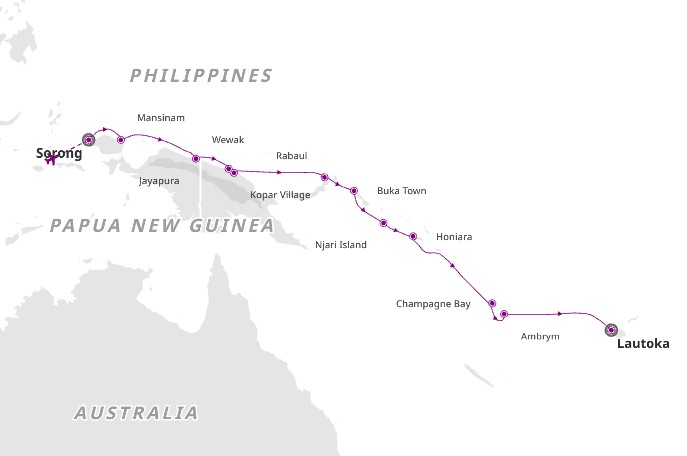
Day 1: Arrive in Bali
You will arrive into Bali today and will have an included hotel night in the city.
Day 2: Fly to Sorong, West Papua
Today you will take a flight from Bali to Sorong, known as the gateway to the crystalline waters of Raja Ampat, the world's most biodiverse marine habitat, home to over 1,500 species of fish and 75% of the world's known coral species. In town, the Buddhist pagoda of Sapta Ratna stands tall on a hilltop overlooking the harbour. Local fishing boats come in with their catch at the bustling Pasar Jembutan Puri fish market .This afternoon you will embark your expedition cruise ship ready to begin your adventure.
Day 3: Pulau Mansinam, Papua
Pulau Mansinam lies in Doreri Bay opposite Manokwari and holds a special place in the history and identity of West Papua. It is often described as the cradle of Christianity in Papua: on 5 February 1855, German missionaries Otto and Gustav Geissler landed here, marking the beginning of Christianity’s spread across the region. A monument on the island commemorates this event, and the landing date is still observed as an important moment in local history. Beyond its cultural significance, Mansinam is also surrounded by reefs that shelter tropical fish and a wide range of marine life. The island’s story also connects strongly to World War II: between 1942 and 1944, the Manokwari area and nearby islands were used by Japanese forces as a strategic base to control sea routes between New Guinea’s northern coast and islands such as Biak and Numfoor, before becoming part of the Allied campaign to liberate western New Guinea.
Day 4: At Sea
You will spend today at sea. Be sure to spend some time out on deck watching the world go by and enjoying your ship facilities.
Day 5: Jayapura, Papua
Jayapura, Papua's provincial capital, serves as a base to explore the rugged Baliem Valley. Winding trails lead through verdant highlands to secluded waterfalls and saltwater springs. Traditional life endures in tribal villages hidden in the rainforest, featuring religious ceremonies or mock tribal wars. In Jayapura, museums recount the intense WWII battles, where Allied and Japanese forces clashed for control of the Pacific theatre.
Day 6: Wewak
Wewak, East Sepik's capital, is a coastal gateway to the vast Sepik River, a winding lifeline through lush sago swamps, nipa palms and tranquil lagoons. Along its banks, stilted villages uphold vibrant traditions, from canoe travel to crafting intricate masks, wood carvings and towering Haus Tambaran spirit houses. Wewak also holds echoes of WWII history, with relics and the Cape Wom Memorial marking Japan’s surrender in Papua New Guinea.
Day 7: Kopar Village, Sepik River
The Sepik River gracefully winds through rainforest and swampland, revealing tribal villages and stilt structures on muddy banks. In these homesteads, traditional ways of life persist with tribal ceremonies, spirit houses, and stories behind intricately carved masks and totems. Crocodiles, symbols of power, coexist with revered birds of paradise like Goldie's and sicklebills, punctuating the landscape with bursts of bright plumage.
Day 8: At Sea
You will spend today at sea, heading east towards New Britain. Enjoy a presentation with your onboard expedition team as you sail.
Day 9: Rabaul
Rabaul, the former capital of New Britain in Papua New Guinea's northeastern tip, is a town with a remarkable volcanic history. Situated inside a flooded caldera and near the active Tavurvur volcano, Rabaul has been rebuilt multiple times, including after the 1994 eruption. Its bustling markets, rich wartime heritage and a strategic harbour make Rabaul an intriguing destination. An observatory oversees the country's volcanic activity.
Day 10: Buka Town, Buka Island
Day 11: Njari Island
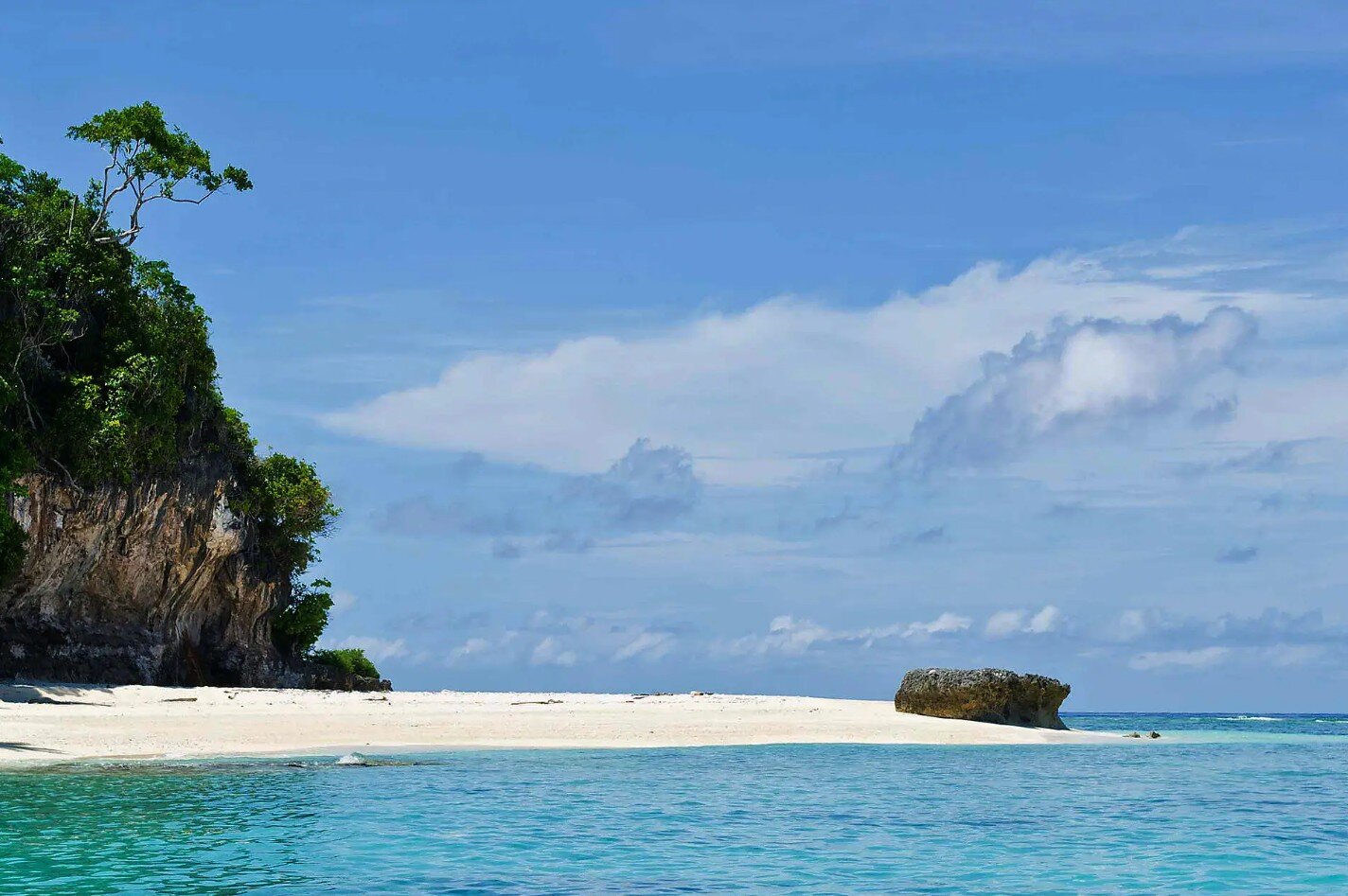
Njari is a tiny, uninhabited island off Gizo in the Solomon Islands, a strip of white sand and tropical foliage set in clear lagoon water. The surrounding reefs sit in the Coral Triangle, so the sea life here is often rich and close to shore. It is a quiet pause in the day, with a feeling of being far from everything.
Day 12: Honiara, Guadalcanal Island
The capital of the Solomon Islands, Honiara sits on the northeastern coast of Guadalcanal at the mouth of the Mataniko River. A relatively new city, it grew up around a U.S. military base during and after WWII. In 1952 it superseded Tulagi as the premier city of these islands. Honiara’s U.S. War Memorial provides a comprehensive war-history lesson of the area. Today the town is laid-back and relatively tourist free with a real-life atmosphere.
Day 13: At Sea
You will spend today at sea, crossing from the Solomon Islands to Vanuatu
Day 14: Champagne Beach, Espiritu Santo Island
Espiritu Santo is the largest island in Vanuatu, where dense rainforest meets luminous blue lagoons and long stretches of white sand. Known for its clear waters and quiet bays, the island offers a relaxed rhythm shaped by nature and local life. Inland, hidden freshwater pools and forest trails invite unhurried exploration, while along the coast, coral reefs and historic sites tell stories of both natural beauty and a layered past. Champagne Beach is a quiet, sheltered cove where pale sands meet clear, gently lapping water. Named for the soft effervescence created by waves moving over volcanic rock beneath the surface, the beach offers a calm, almost meditative setting.
Day 15: Ambrym Island
Ambrym Island is part of Vanuatu's Y-shaped, volcanic archipelago, spanning 1,300 km in the South Pacific. The fifth largest of Vanuatu's 80 islands, Ambrym features black-sand beaches and the awe-inspiring twin volcanoes of Mount Marum and Mount Benbow. Lush rainforest covers Ambrym, where villagers practise traditional magic and create renowned sand drawings. Kava, made from the root of the local plant, is the ceremonial drink.
Day 16: At Sea
You will spend a final day at sea, crossing from Vanuatu to Fiji. Be sure to spend time out on deck watching the world go by as you sail.
Day 17: Lautoka, Viti Levu
Viti Levu is the largest island in the Republic of Fiji, and site of the nation's capital, Suva. Lautoka, Fiji’s second-largest city, is often referred to as ‘Sugar City’ because of its historical association with the sugar industry. The former Sugar Mill has been converted into an inviting museum, showcasing the rich history of Lautoka's sugar industry, the sugar production process and features vintage machinery.
We strongly recommend that you plan to stay at least one night in Fiji at the end of your trip to mitigate against any potential sailing delays.
Dates
Enquire / Book
28 Sep - 14 Oct 2026
-
from € 12,485
Darwin - Raja Ampat - Papua New Guinea - Cairns (17 Days)
Premium Expedition Cruise ship (264 passengers)
Includes: Programme of shore excursions and activities
Optional Activities (not included): Scuba Diving
From price per person in a Standard Stateroom
Contact Us for all cabin prices & availability
Enquire / Book
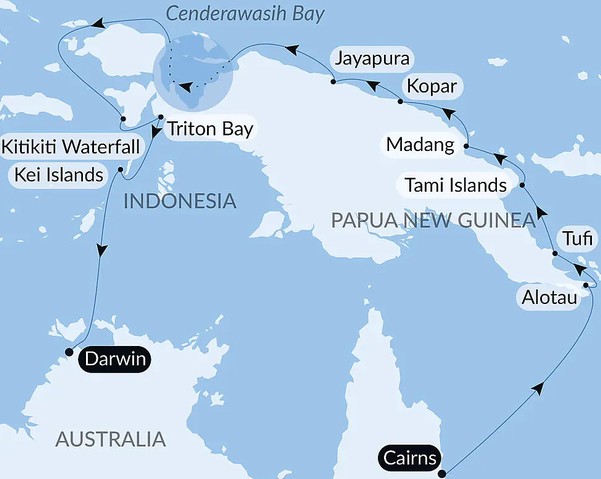
24 Oct - 09 Nov 2026
-
from € 11,955
Cairns - Papua New Guinea - Raja Ampat - Darwin (17 Days)
Premium Expedition Cruise ship (264 passengers)
Includes: Programme of shore excursions and activities
Optional Activities (not included): Scuba Diving
From price per person in a Standard Stateroom
Contact Us for all cabin prices & availability
Enquire / Book
02 - 16 Apr 2027
-
from £ 8,725
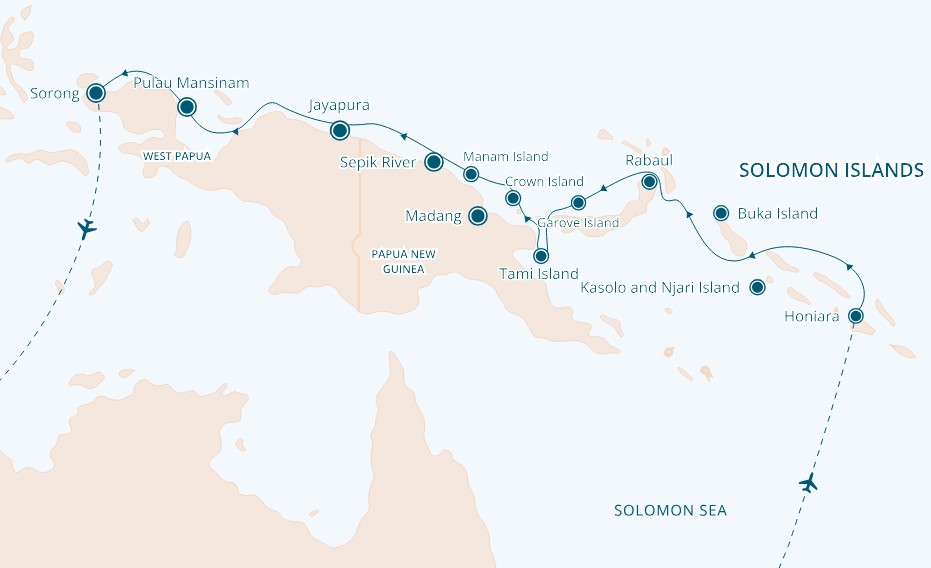
Brisbane - Honiara - Solomons - PNG - Sorong - Bali (15 Days)
Premium Expedition Cruise ship: 152 passengers
Includes: 1 pre-voyage hotel night in Brisbane, charter flights Brisbane-Honiara // Sorong-Bali, programme of shore excursions and activities
Optional Activities: additional optional cultural visits
From price per person in a Window Cabin
Contact us for all cabin prices & availability
Enquire / Book
02 - 16 Apr 2028
-
from £ 8,050
Brisbane - Honiara - Solomons - PNG - Sorong - Bali (15 Days)
Premium Expedition Cruise ship: 152 passengers
Includes: 1 pre-voyage hotel night in Brisbane, charter flights Brisbane-Honiara // Sorong-Bali, programme of shore excursions and activities
Optional Activities: additional optional cultural visits
From price per person in a Window Cabin
Contact us for all cabin prices & availability
Enquire / Book
02 - 18 Nov 2028
-
from £ 9,295
Bali - Sorong - PNG - Solomons - Vanuatu - Fiji (17 Days)
Premium Expedition Cruise ship: 152 passengers
Includes: 1 pre-voyage hotel night in Bali, one-way flight Bali-Sorong, programme of shore excursions and activities
Optional Activities: additional optional cultural visits
From price per person in a Window Cabin
Contact us for all cabin prices & availability